
সাম্প্রদায়িকতার ঊর্ধ্বে বিজেপি
A publication by Dr. Gopesh Chandra Sarkar.

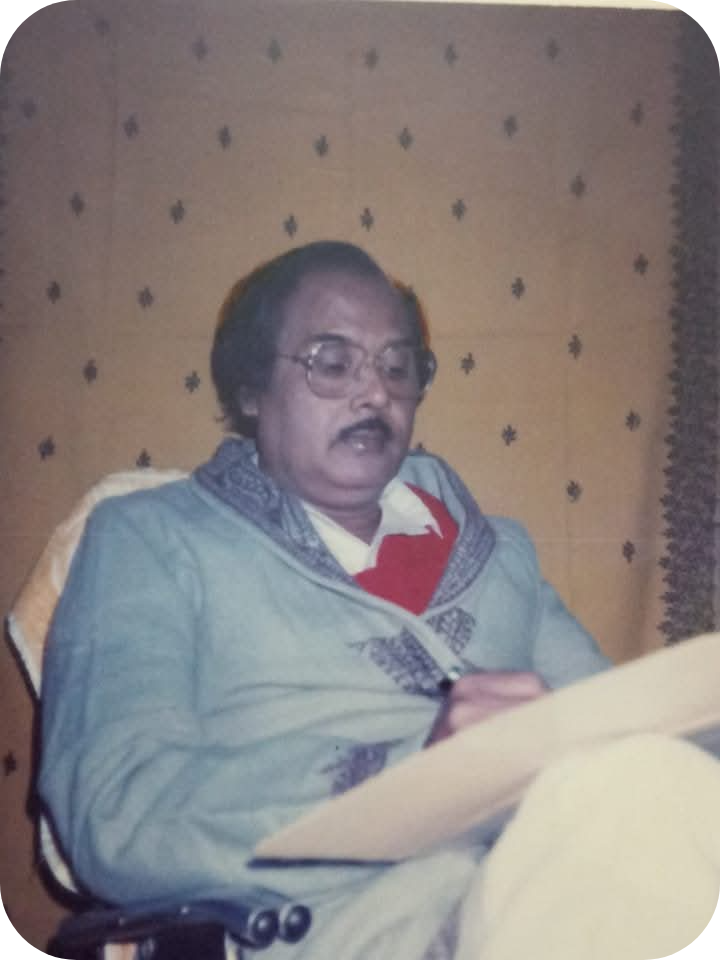
Dr. Gopesh Chandra Sarkar was a dedicated scholar, a strong nationalist, and a lifelong learner. With a PhD in Botany and being a self-taught homeopath, he was widely respected for his calm strength, clear thinking, and deep commitment to education and service. He valued hard work, honesty, and helping others, earning admiration in both academic and community circles. Beyond his academic and political pursuits, he had a wide range of interests including music, magic, art, yoga and spiritualism, medical science, driving, rifle shooting (through the NCC), photography, telegraphy, astrology, etc. He actively participated in social service programs and maintained a profound inclination toward the spiritual world. Even after retirement, his patriotic wisdom, principled life, and quiet sacrifices continued to inspire everyone around him.
A publication by Dr. Gopesh Chandra Sarkar.

A publication by Dr. Gopesh Chandra Sarkar.
A publication by Dr. Gopesh Chandra Sarkar.

A publication by Dr. Gopesh Chandra Sarkar.

A publication by Dr. Gopesh Chandra Sarkar.
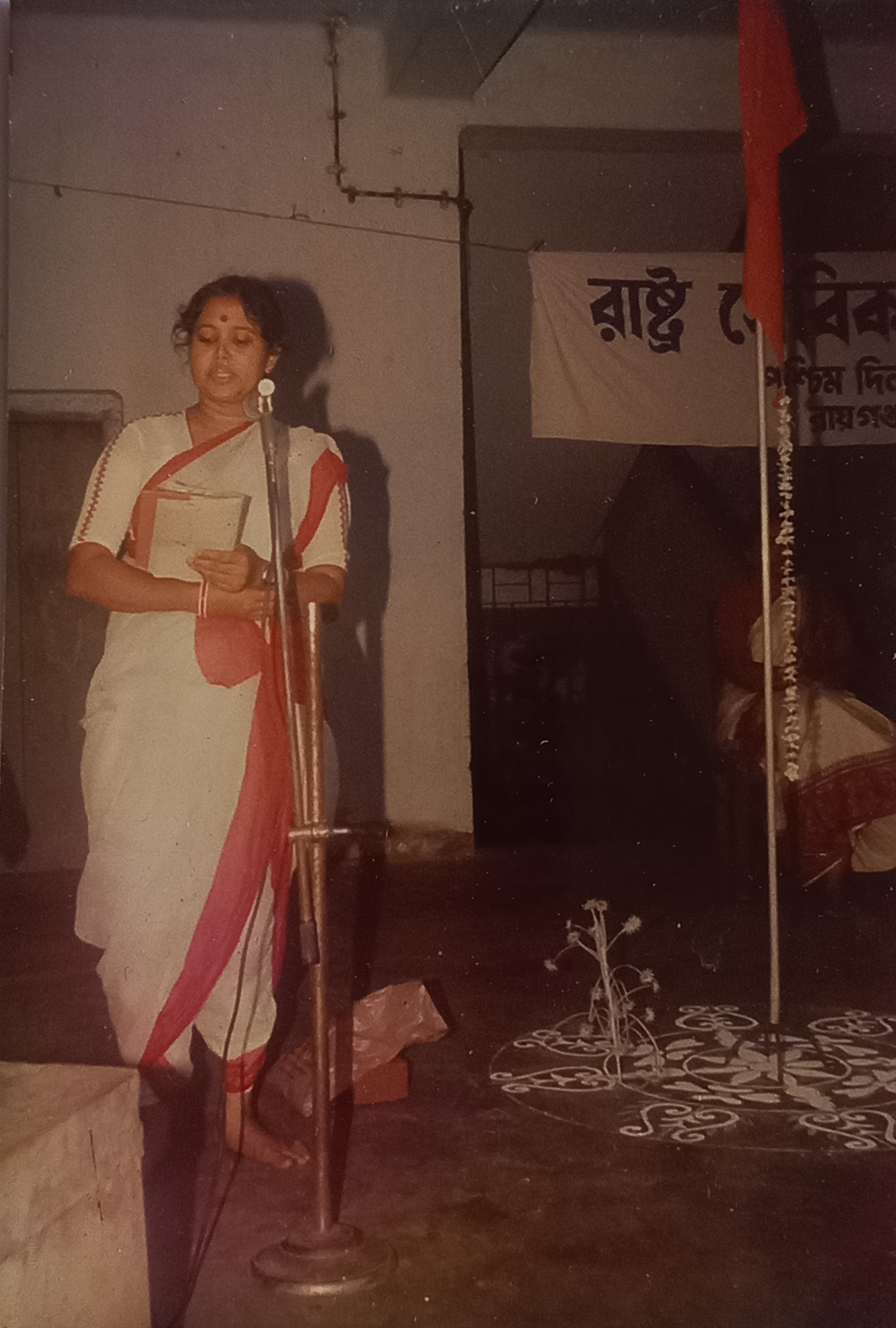
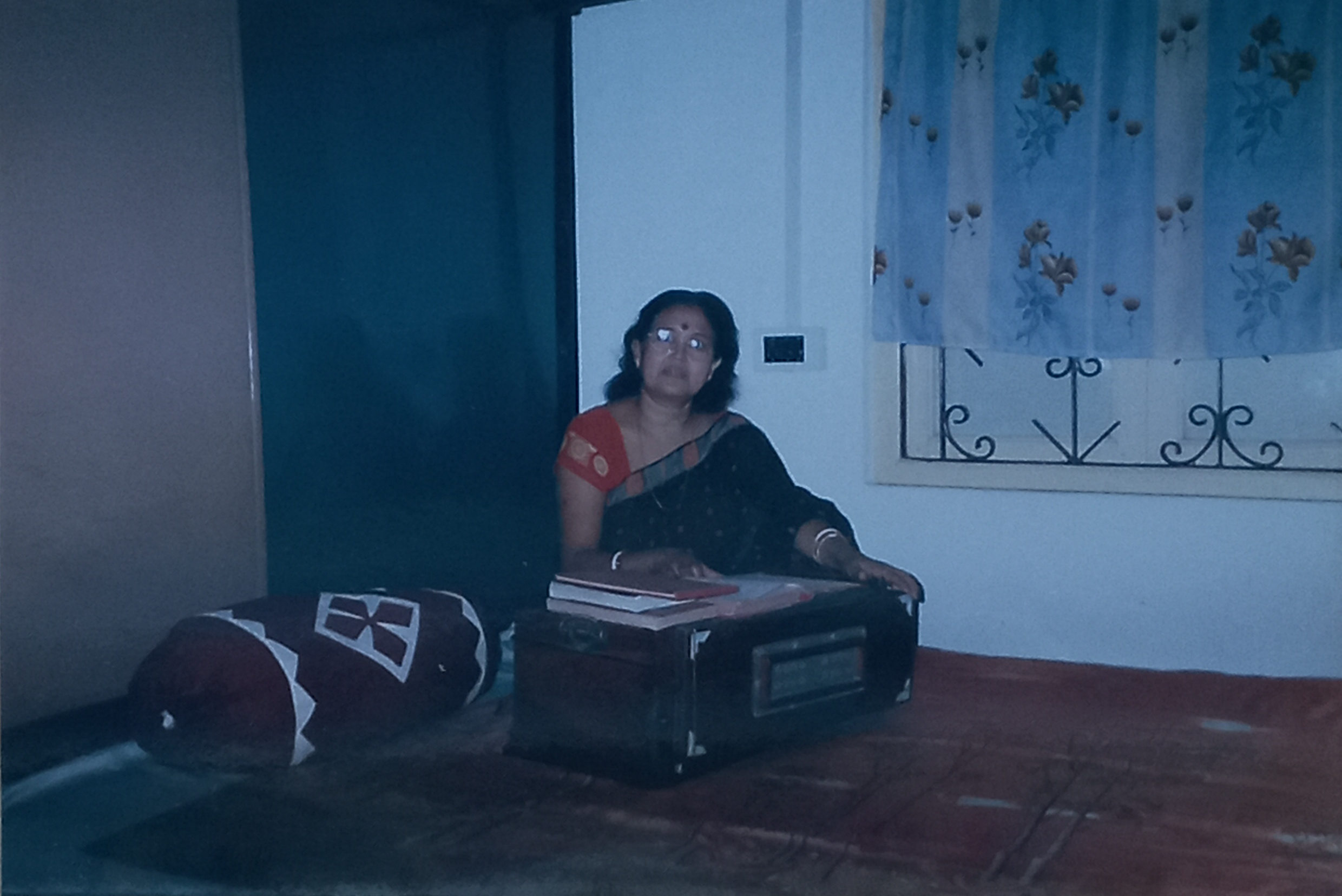
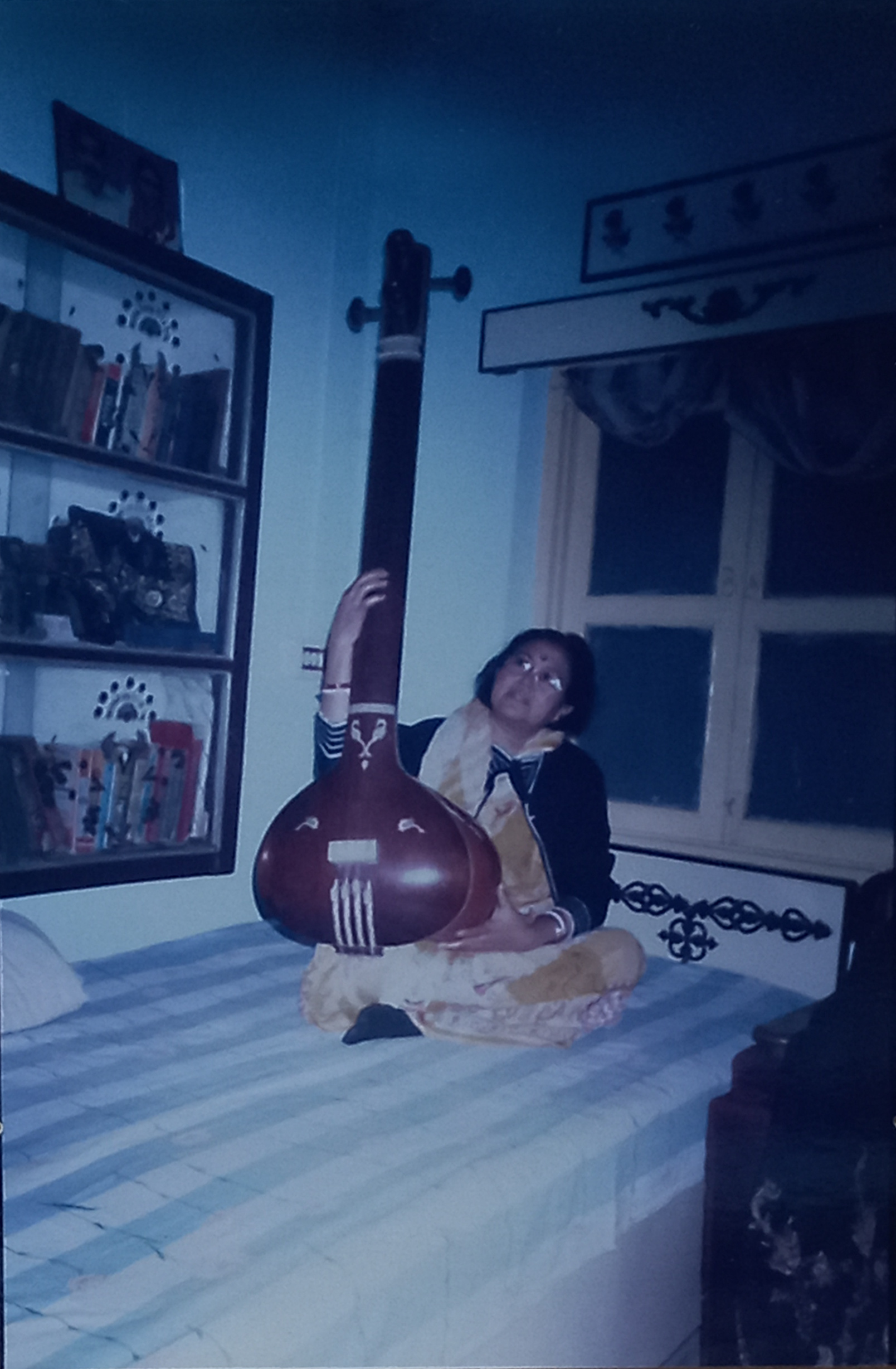
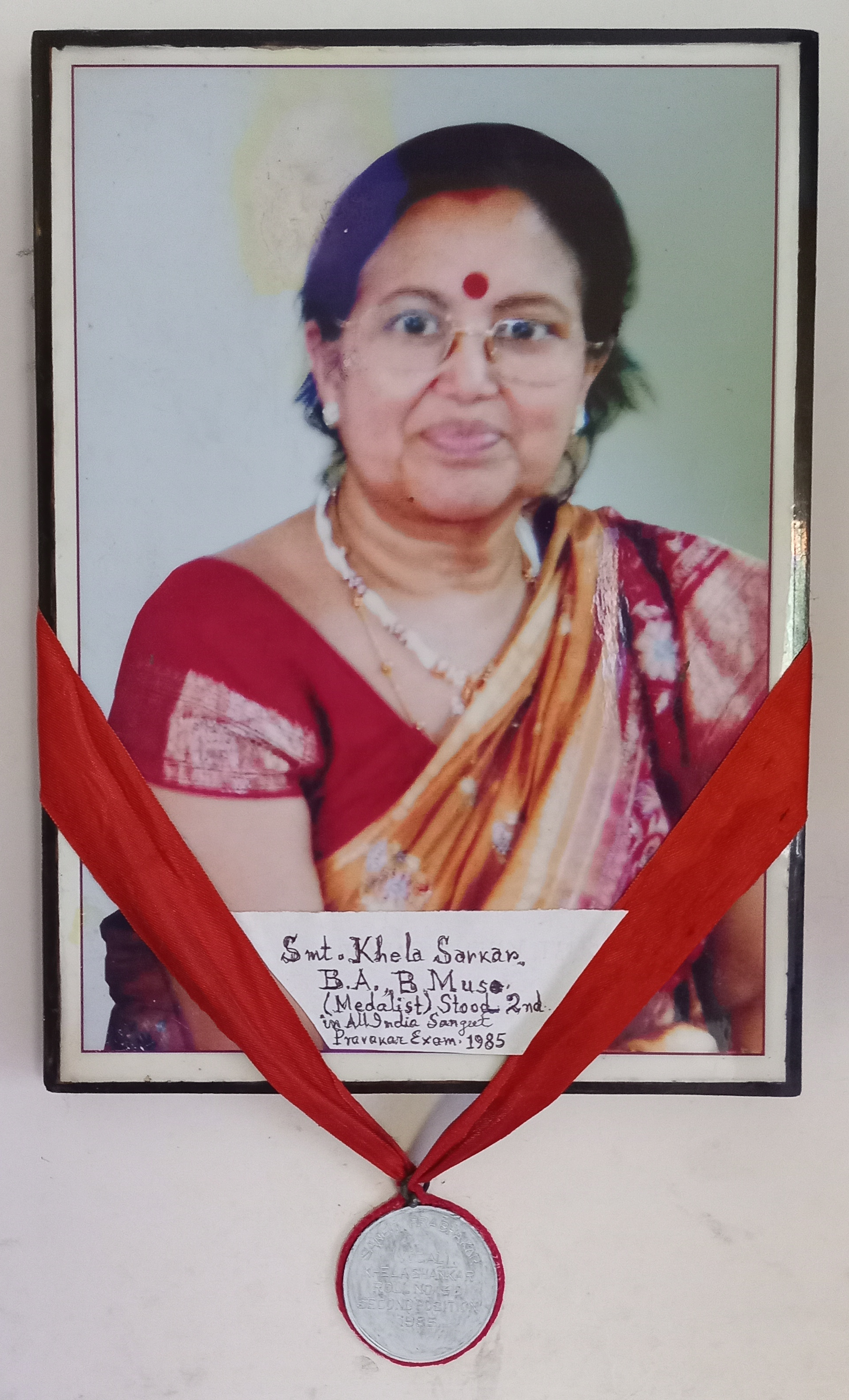
Shreemati Khela Sarkar, also known by her alias Jaya Sarkar, is the spouse of Dr. Gopesh Chandra Sarkar. Her life has been defined by her unwavering dedication to the Rashtra Sevika Samiti and her deep passion for music.
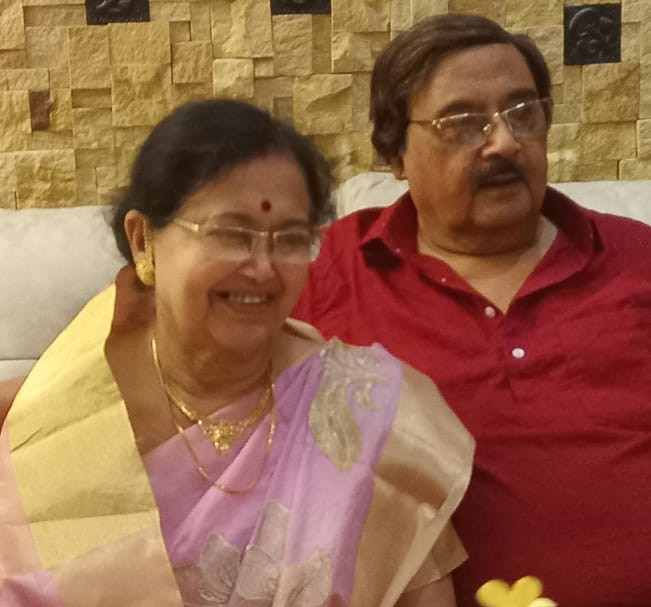
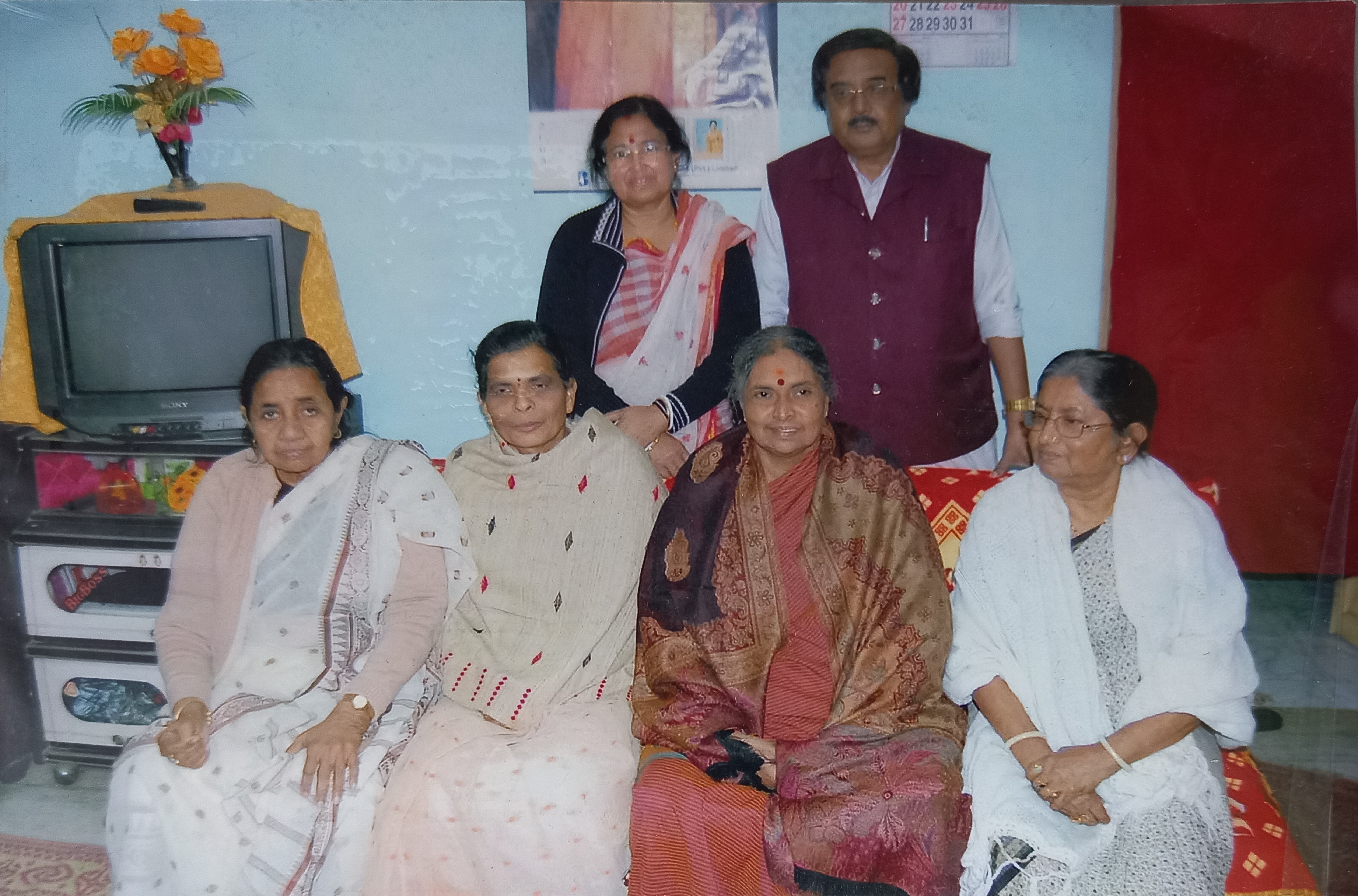
This is an image of Dr. Gopesh Chandra Sarkar and Smt. Khela Sarkar with Smt. Venkatramaiah Shantha Kumari ("Shanthakka"), the current Pramukh Sanchalika (Chief) of the Hindu nationalist women’s organisation Rashtra Sevika Samiti. Also pictured are Smt. Sunita Haldekar (All India Sampark Pramukh), Smt. Mahua Dhor (Kshetra Sanchalika), and Smt. Muktiprada Sarkar (Pranta Sanchalika) of the same organisation.
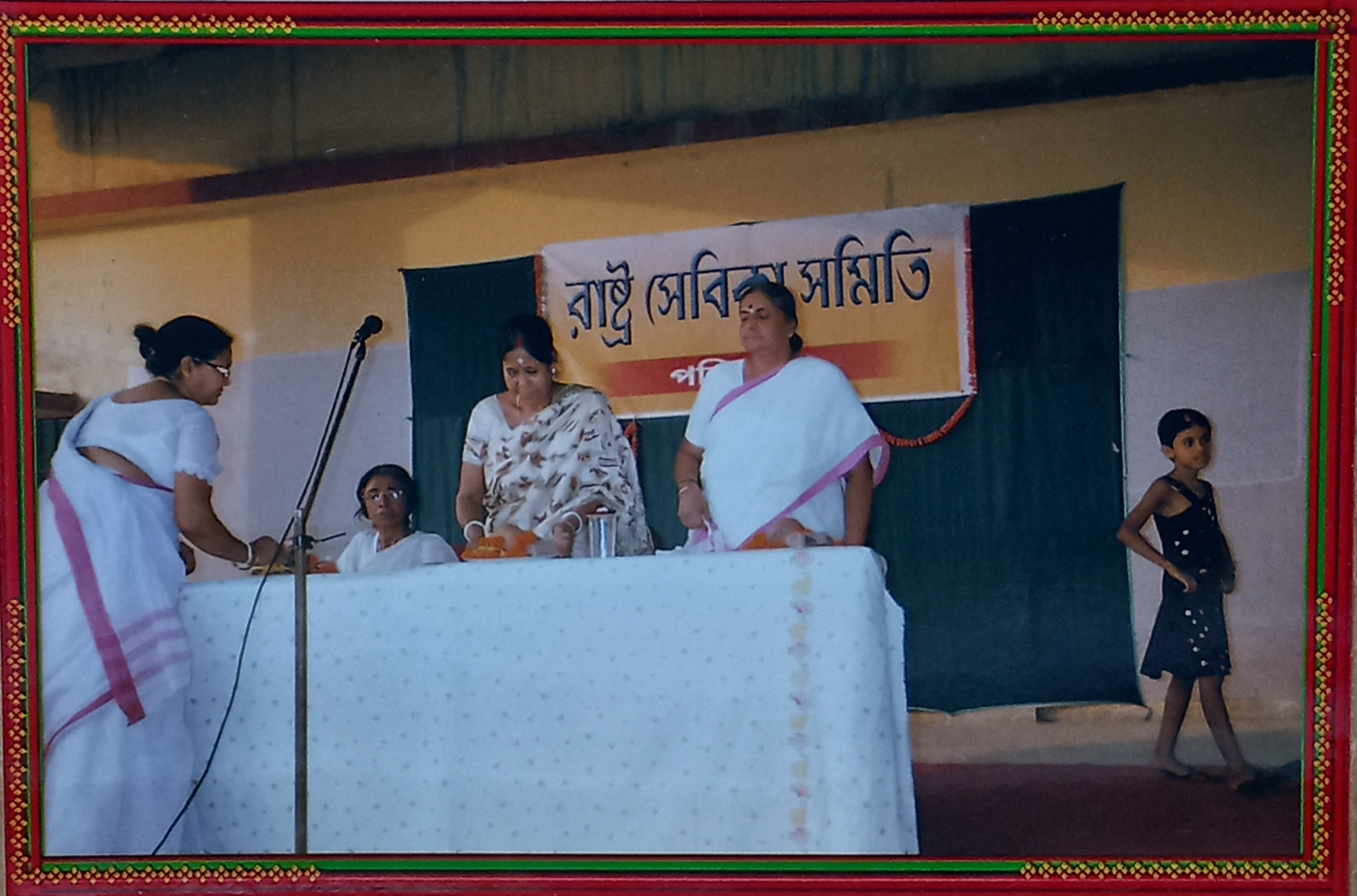
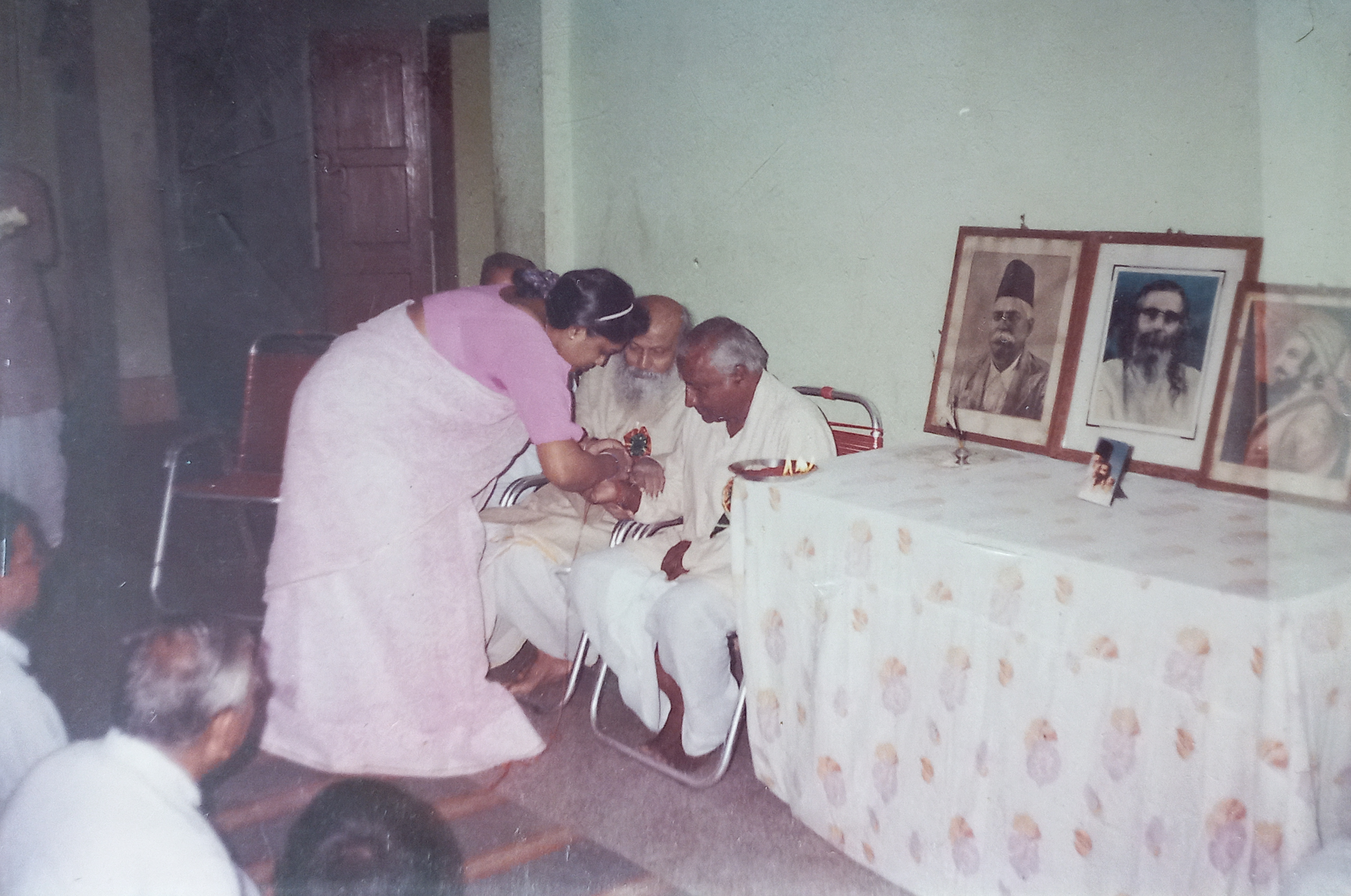
This is an image of SMT. Khela Sarkar on the stage of the Rashtra Sevika Samiti with Venkatramaiah Shantha Kumari, popularly called "Shanthakka", who is the current chief (Sanskrit: Pramukh Sanchalika) of the Hindu nationalist women’s organisation Rashtra Sevika Samiti.
Born on January 1st, 1941, in a modest village in Pabna District (Betil) in undivided Bengal, Dr. Gopesh Chandra Sarkar grew up with an insatiable curiosity for science and spirituality. He pursued higher education with dedication and completed his PhD in Botany in the 1970s, laying the foundation for a lifelong journey of learning.
After earning his PhD, he began a long and respected teaching career at University College (North Bengal University, Raiganj), inspiring thousands of students over 30 years. He also had a keen interest in medical science - allopathy, ayurveda, homoeopathy, naturopathy, etc. He retired in 2003, leaving a lasting impact through his clear thinking, honesty, and deep knowledge.
He was a dedicated member of the Rashtriya Swayamsevak Sangh (RSS). He was invited to join RSS in the 1980s because of his devotion towards Hindu philosophy and research on spirituality. He was also the founder of the spiritual research organisation named Sandhanichakra. He followed the RSS values of discipline, service, and nationalism. Over the years, he became the RSS President (Sanghachalak) of West Dinajpur District (WB). His commitment to public service led him into active politics, where he served as the BJP West Bengal State Vice-President. In 2009, he contested in the Lok Sabha election from the Raiganj constituency as a BJP candidate, campaigning passionately for his ideals and love for the nation, despite limited resources and support.
In his later years, Dr. Sarkar focused on securing his family’s future. He made sure both his sons were well-settled, sending Uttam Sarkar to Bangalore for higher studies and Goutam Sarkar to Kolkata for vocational training. He also supported their marriages: Goutam’s marriage to Priyanka in 2007, and Uttam’s marriage to Moumita in 2008. When his grandsons were born - Tuhin Sarkar in 2010 and Rishav Sarkar in 2012—his role as a guide in the family grew stronger. In December 2020, during the pandemic, he bought a new home and moved to Barasat on 7th April 2021, near the Kolkata airport, selling his Raiganj property. When the family visited the Barasat home in December 2021, it felt like a major milestone—an 80-year-old opening a new chapter for himself and the next generation.
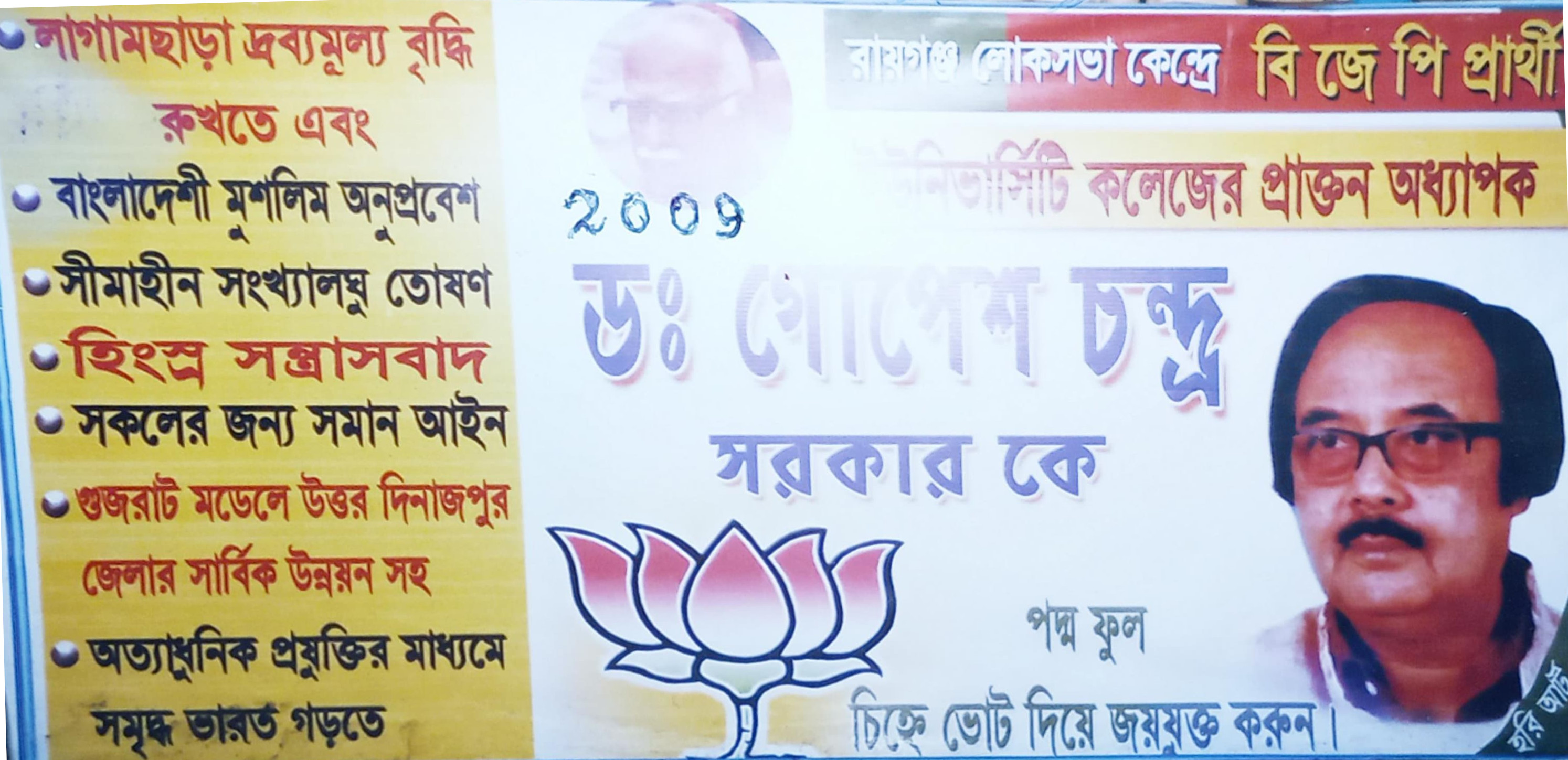
Dr. Gopesh Chandra Sarkar contested in the 2009 Lok Sabha General Elections from the Raiganj constituency from the Bharatiya Janata Party.
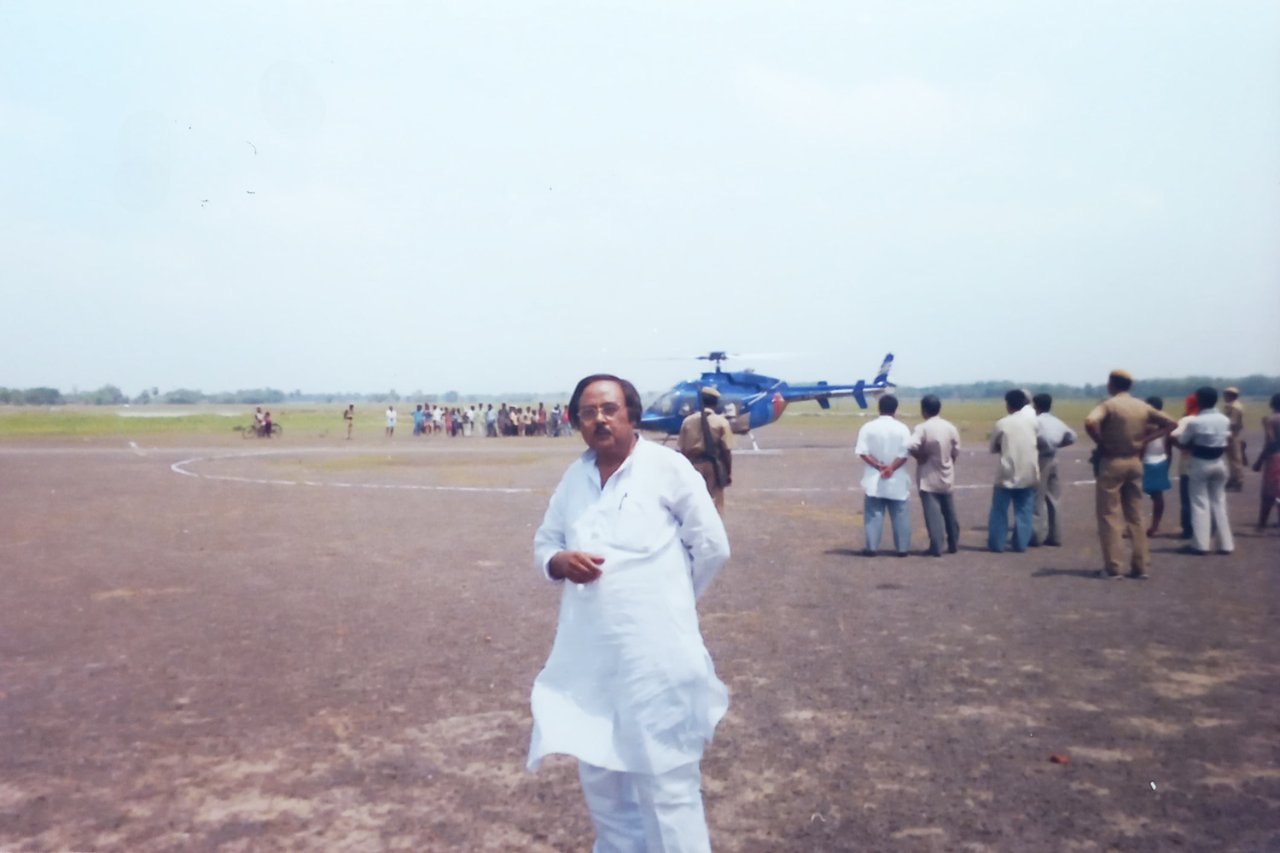
Dr. Gopesh Chandra Sarkar, the State Vice-President of West Bengal, went to receive Arun Jaitley (Minister of Finance and Corporate Affairs of the Government of India) at the Balurghat helipad.
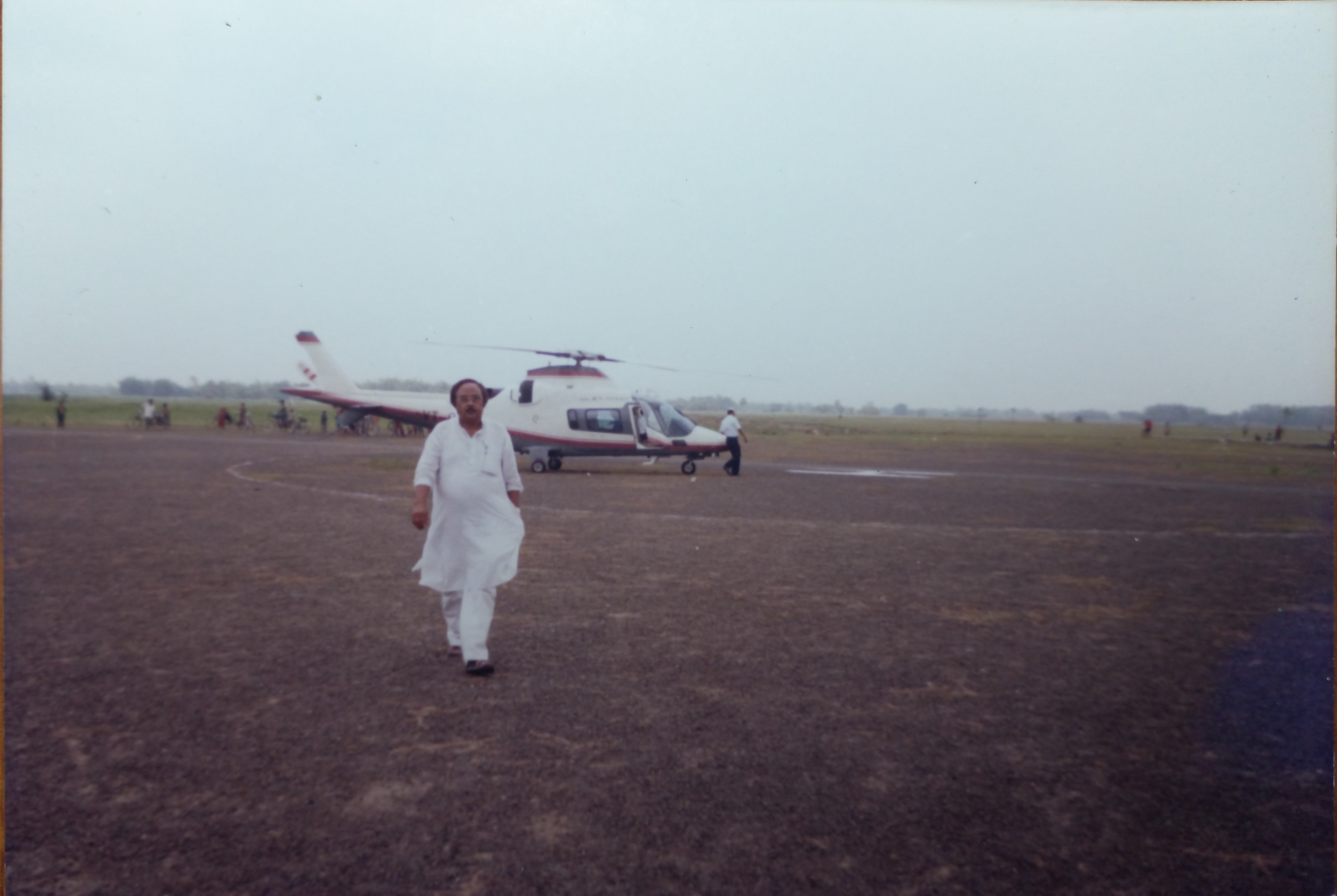
Dr. Gopesh Chandra Sarkar, the BJP State Vice-President of West Bengal, went to receive Arjun Munda, the chief minister of Jharkhand, at the Balurghat helipad.
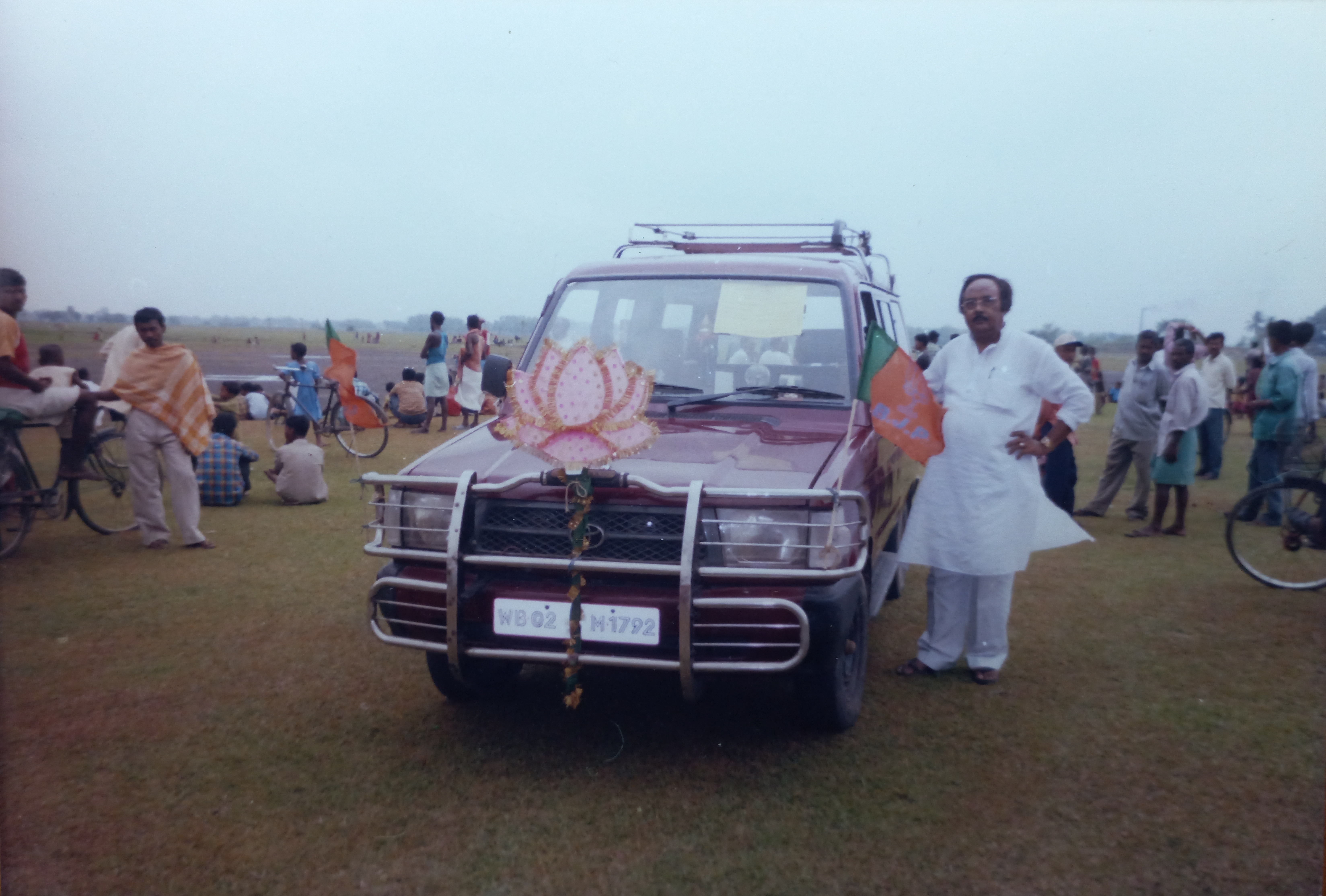
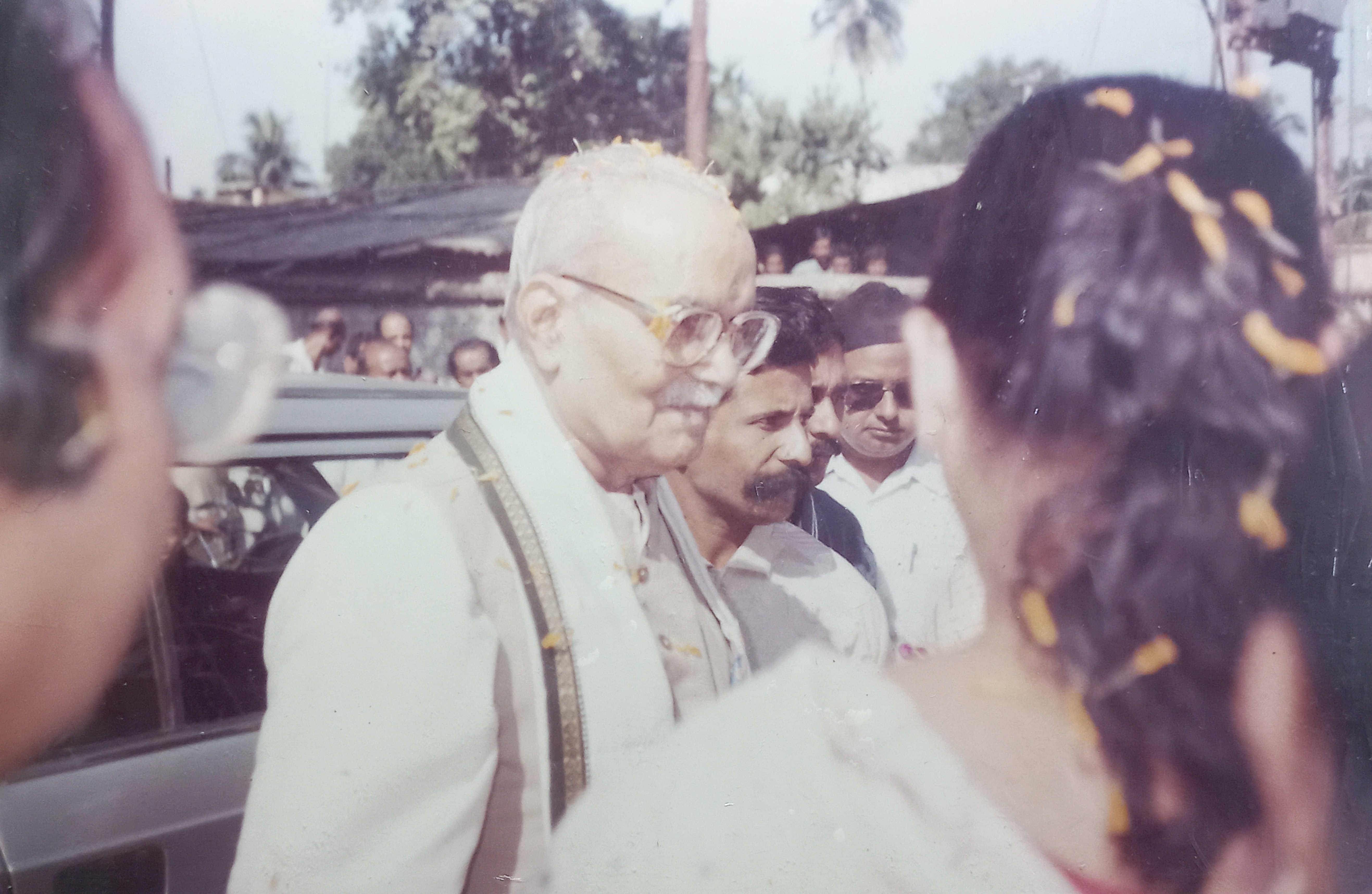
This is a photo of Dr. Gopesh Chandra Sarkar beside the car provided by the party, taken during his tenure as State Vice-President of the BJP in West Bengal. The picture was captured at the moment he arrived to receive LK Advani at the Balurghat Helipad, West Bengal
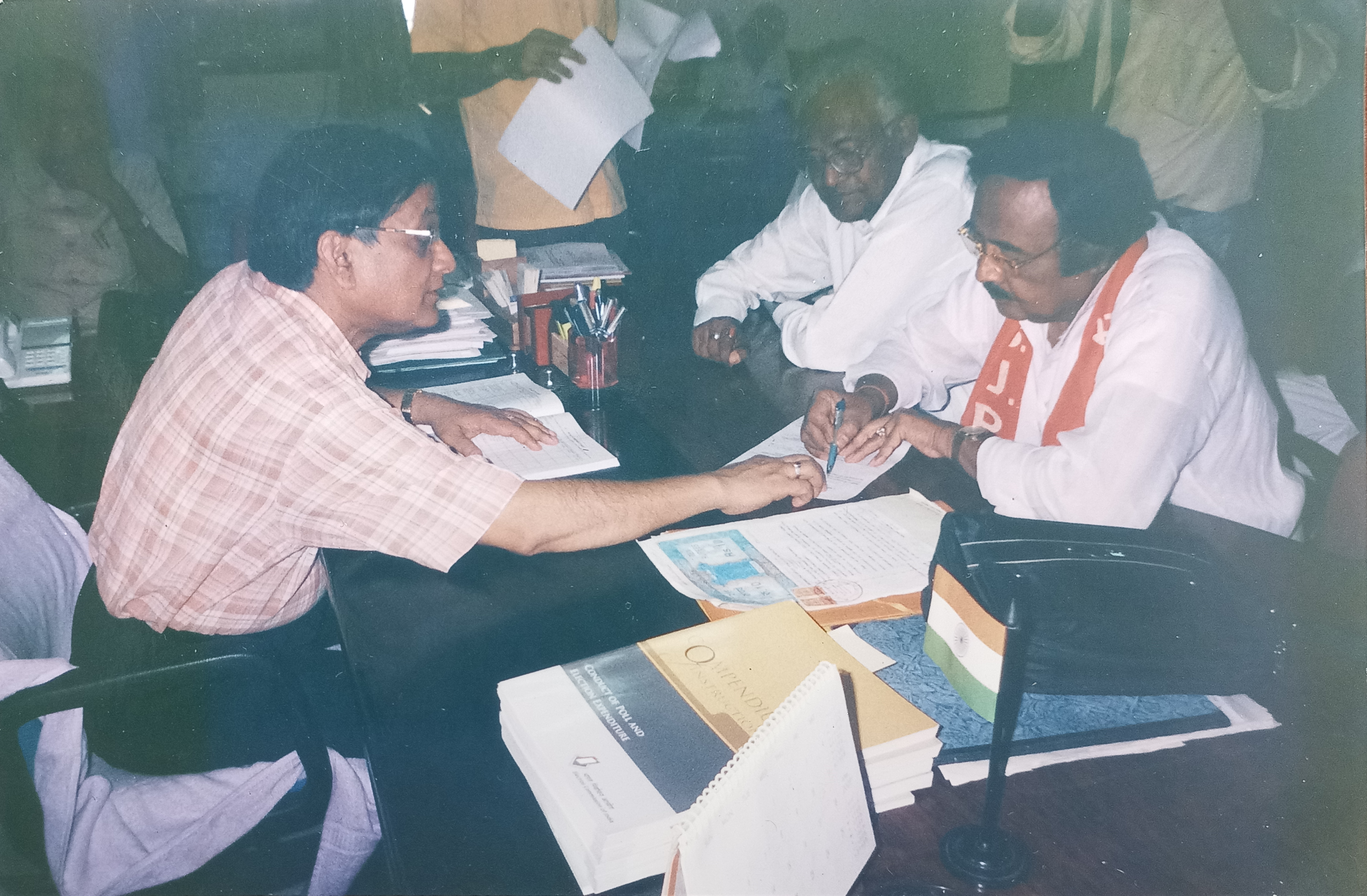
Dr. Gopesh Chandra Sarkar submitting the election nomination papers to the local DM.
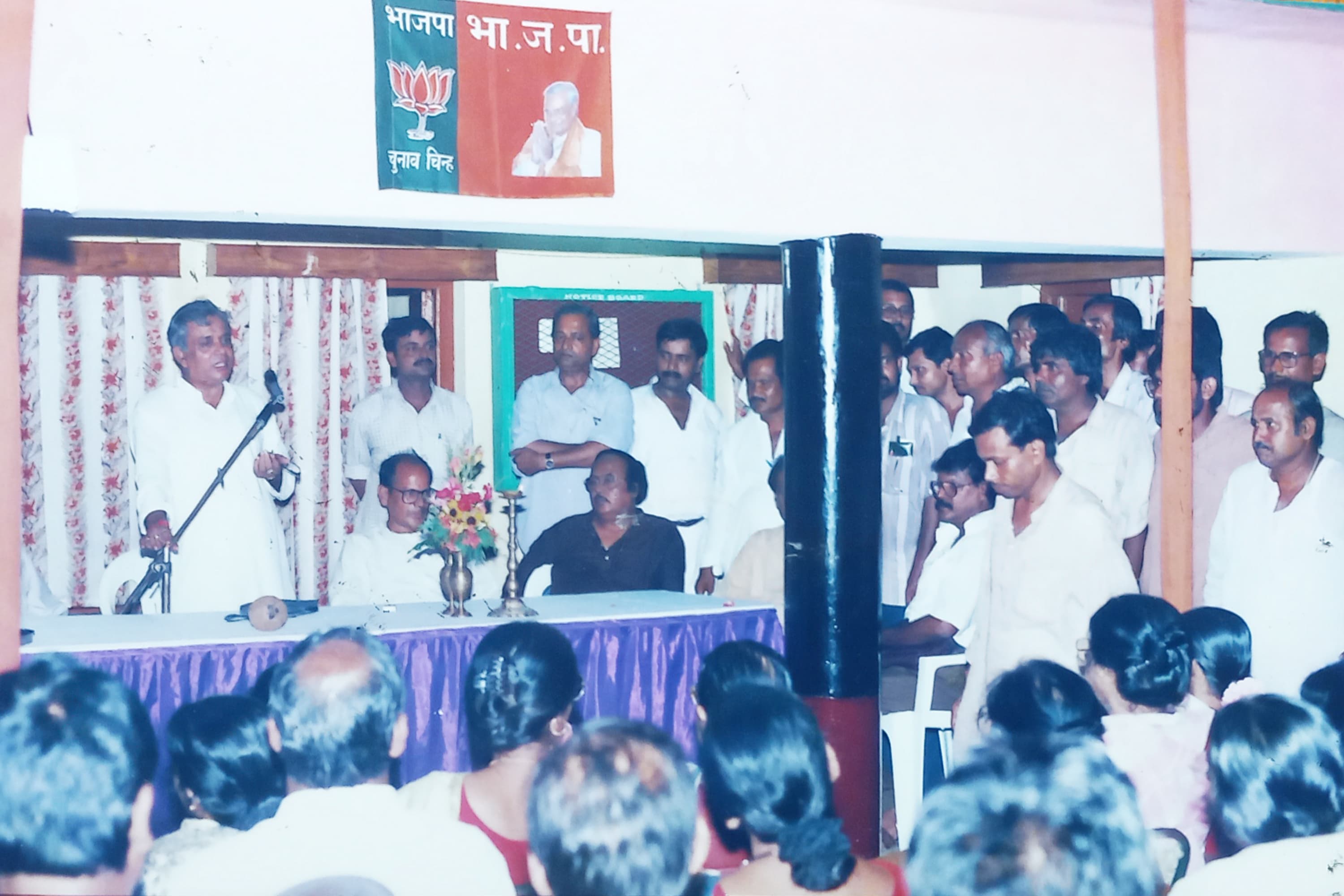
Dr. Gopesh Chandra Sarkar attending a party meeting with the central telecom minister, Shri Tapan Shikdar, at the party office.
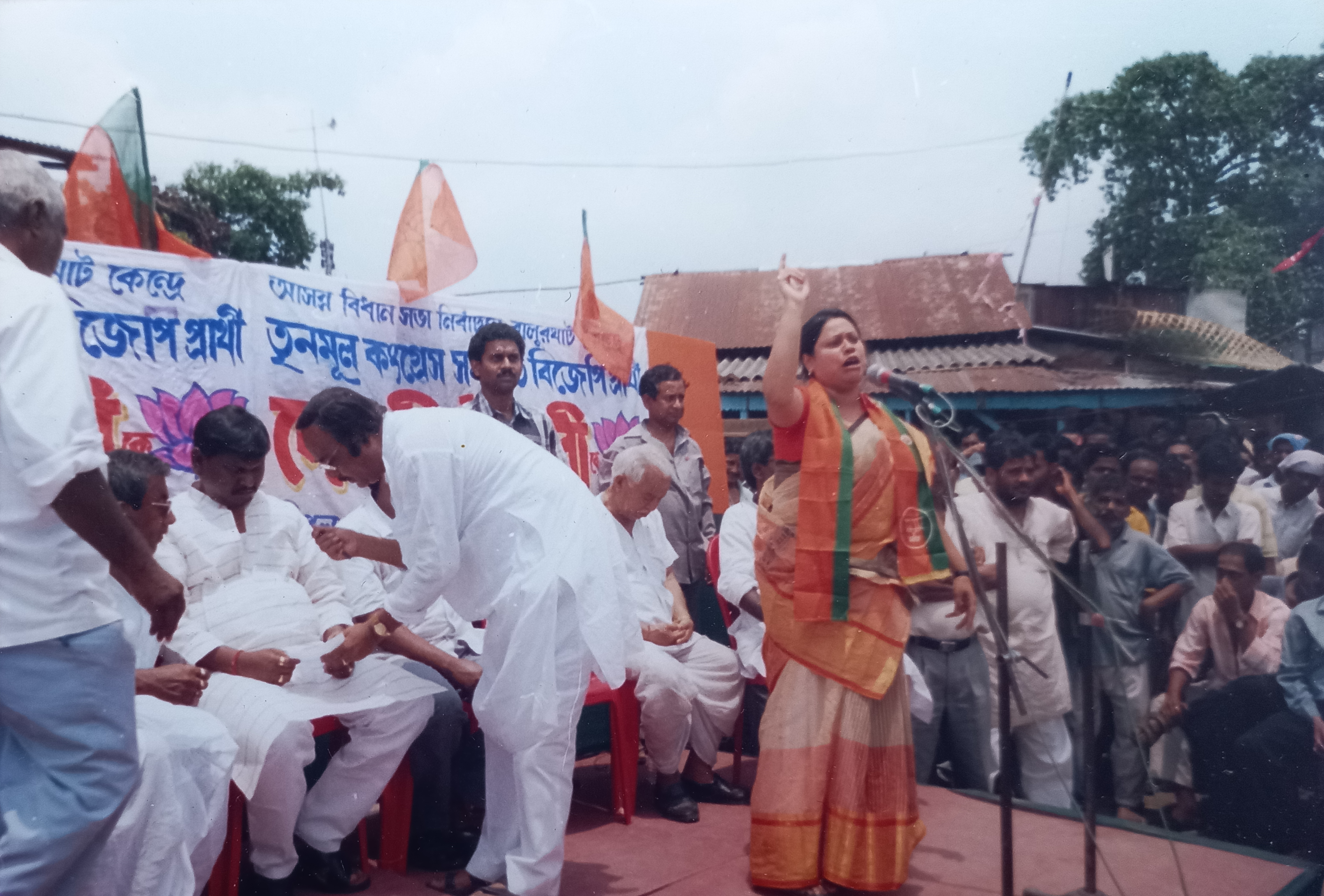
This is the picture of Dr. Gopesh Chandra Sarkar talking to Arjun Munda, Jharkhand's chief minister, during Debashree Choudhury's Speech.
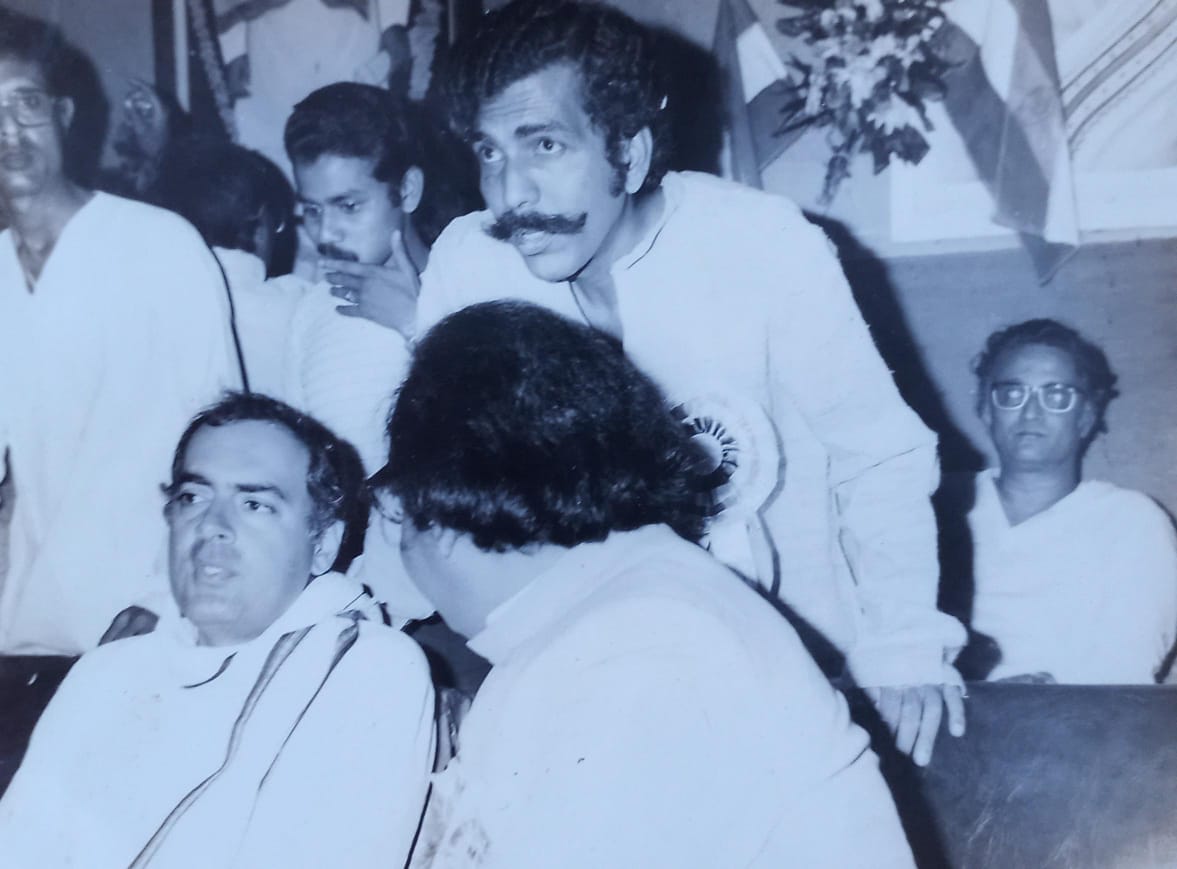
Eminent Congress leader Shri Shankar Chakraborty, classmate and cordial friend of Dr. G.C. Sarkar, is found standing behind Rajiv Gandhi, the then prime minister of India.
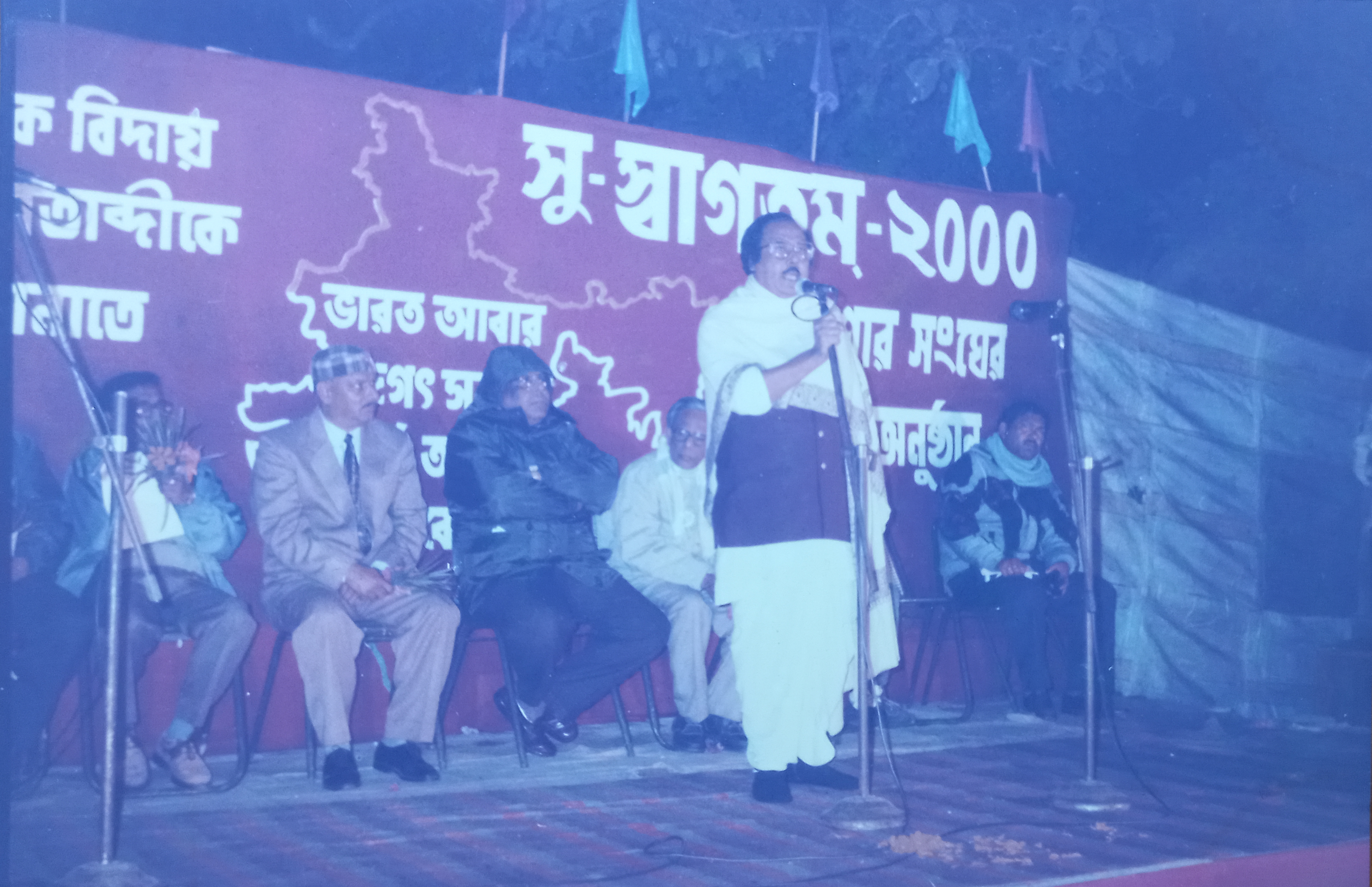
Dr. Sarkar is addressing a patriotic cultural function organised by the Government of India.
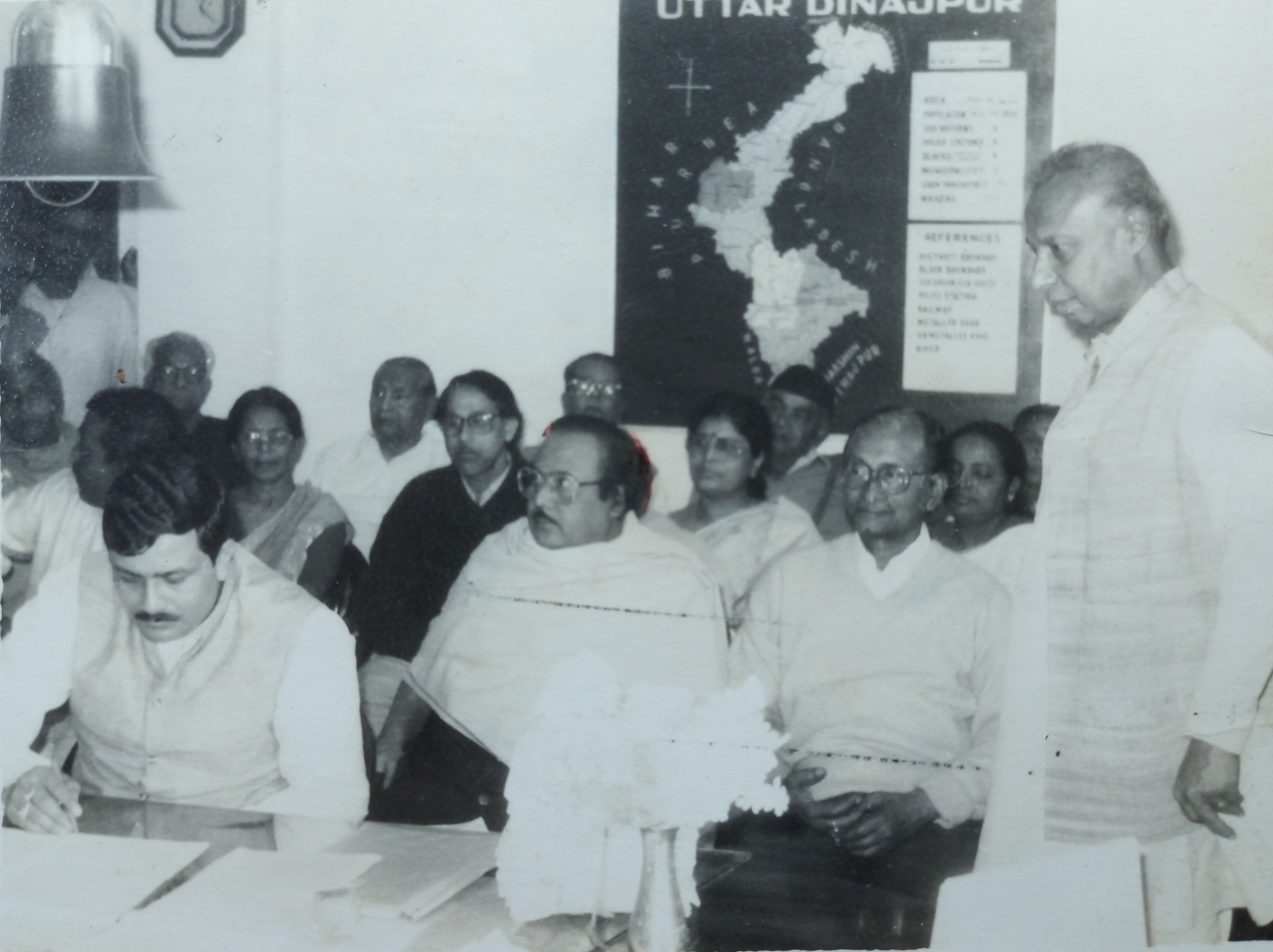
In this picture, you can see Dr. Gopesh Chandra Sarkar attending a meeting for the Bharatiya Janata Party in the presence of Rahul Sinha and Arun Bhadra (State BJP Leaders)
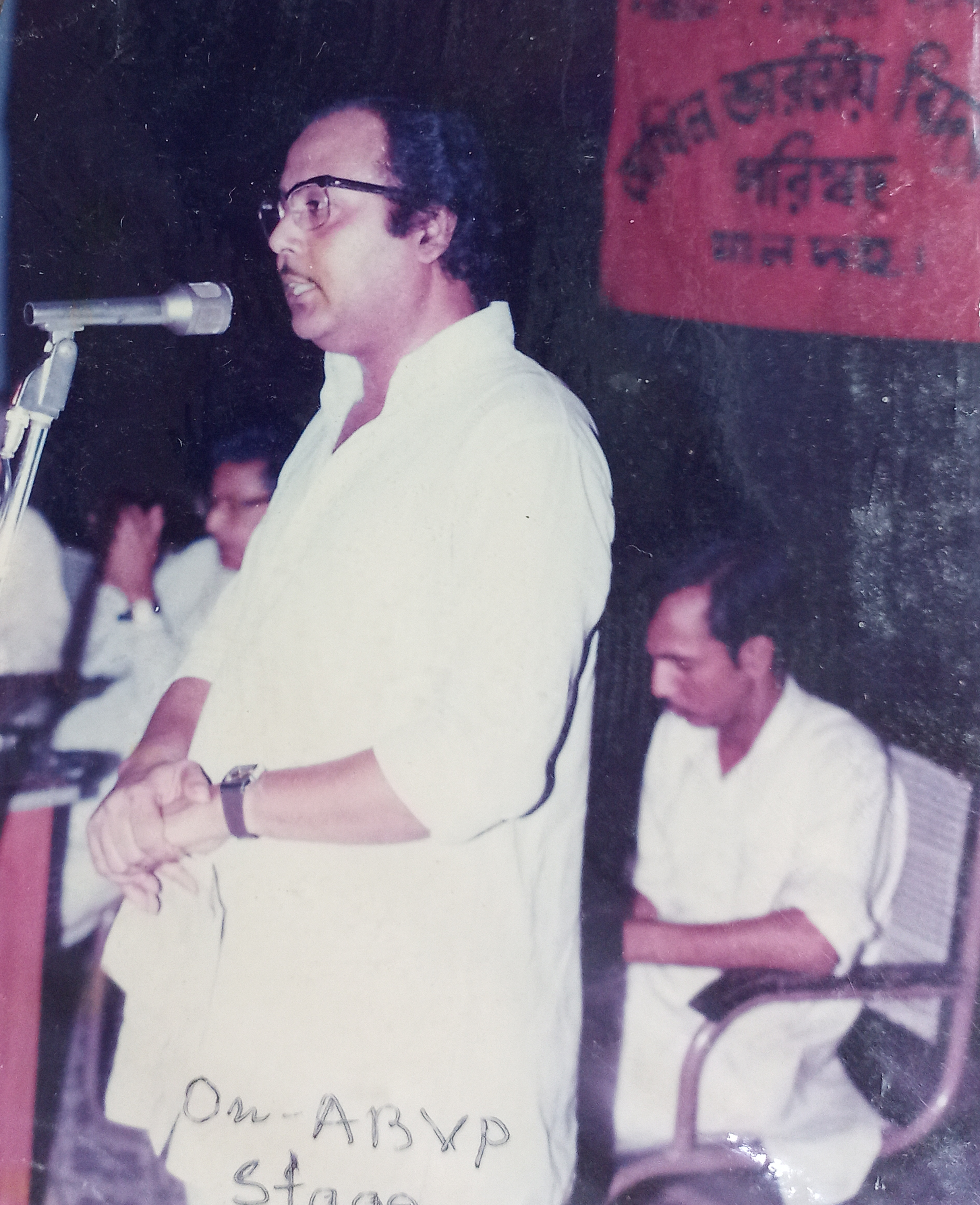
This is an image of Dr. Gopesh giving a speech to students on the stage of the Akhil Bharatiya Vidyarthi Parishad (ABVP), an organisation affiliated with the Rashtriya Swayamsevak Sangh (RSS).
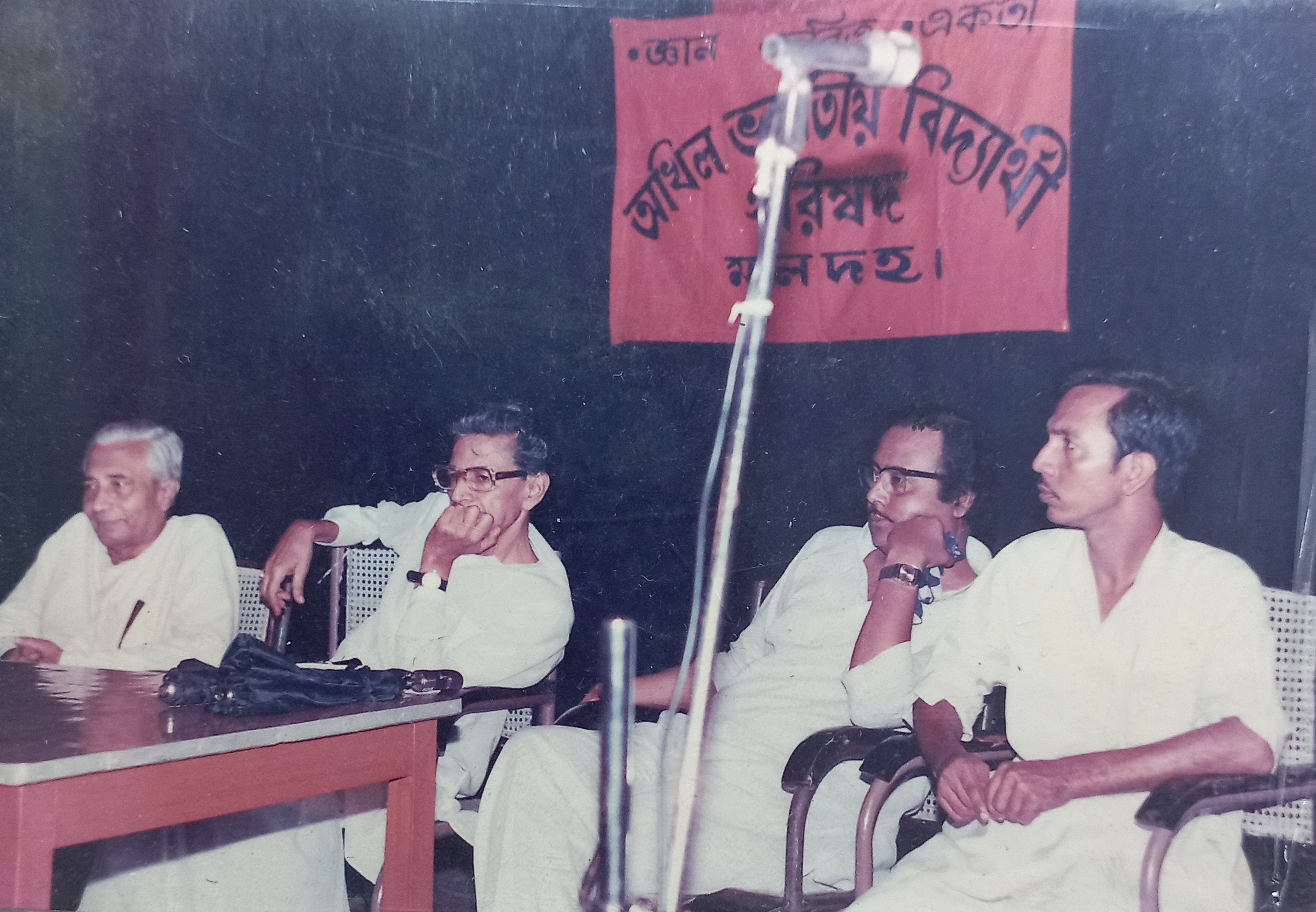
This is an image of Dr. Gopesh sitting on the stage of the Akhil Bharatiya Vidyarthi Parishad (ABVP), an organisation affiliated with the Rashtriya Swayamsevak Sangh (RSS).
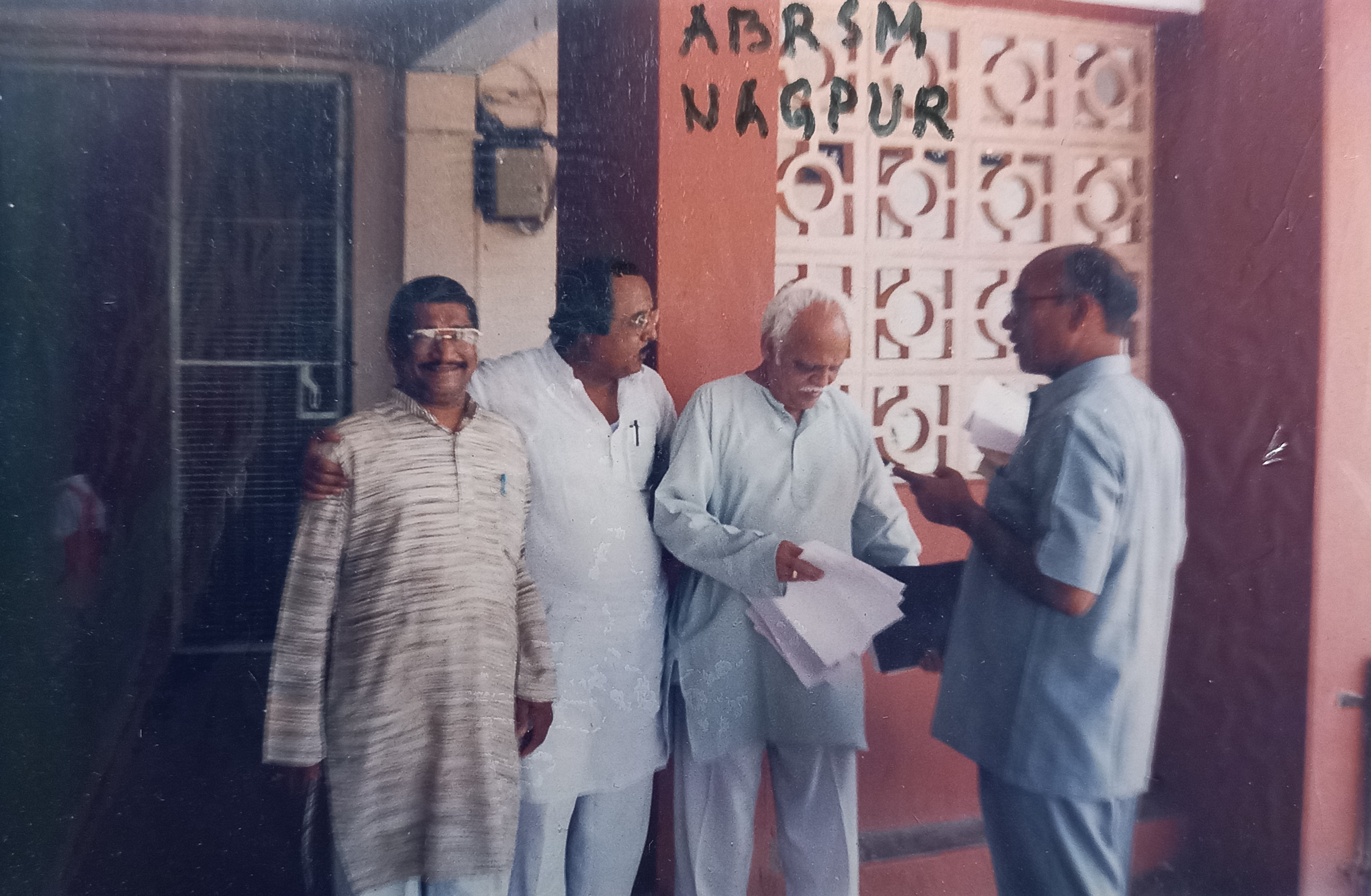
This is a picture of Dr. Gopesh in ABRSM (Akhil Bhartiya Rashtriya Shaikshik Mahasangh) Nagpur. It is an organization that aims to promote Cultural Nationalism in education and society.
This is an image of Shri Krishna Matlog at the residence of Dr. Gopesh. He is a Pracharak (preacher) for the Rashtriya Swayamsevak Sangh (RSS) in Eastern India.
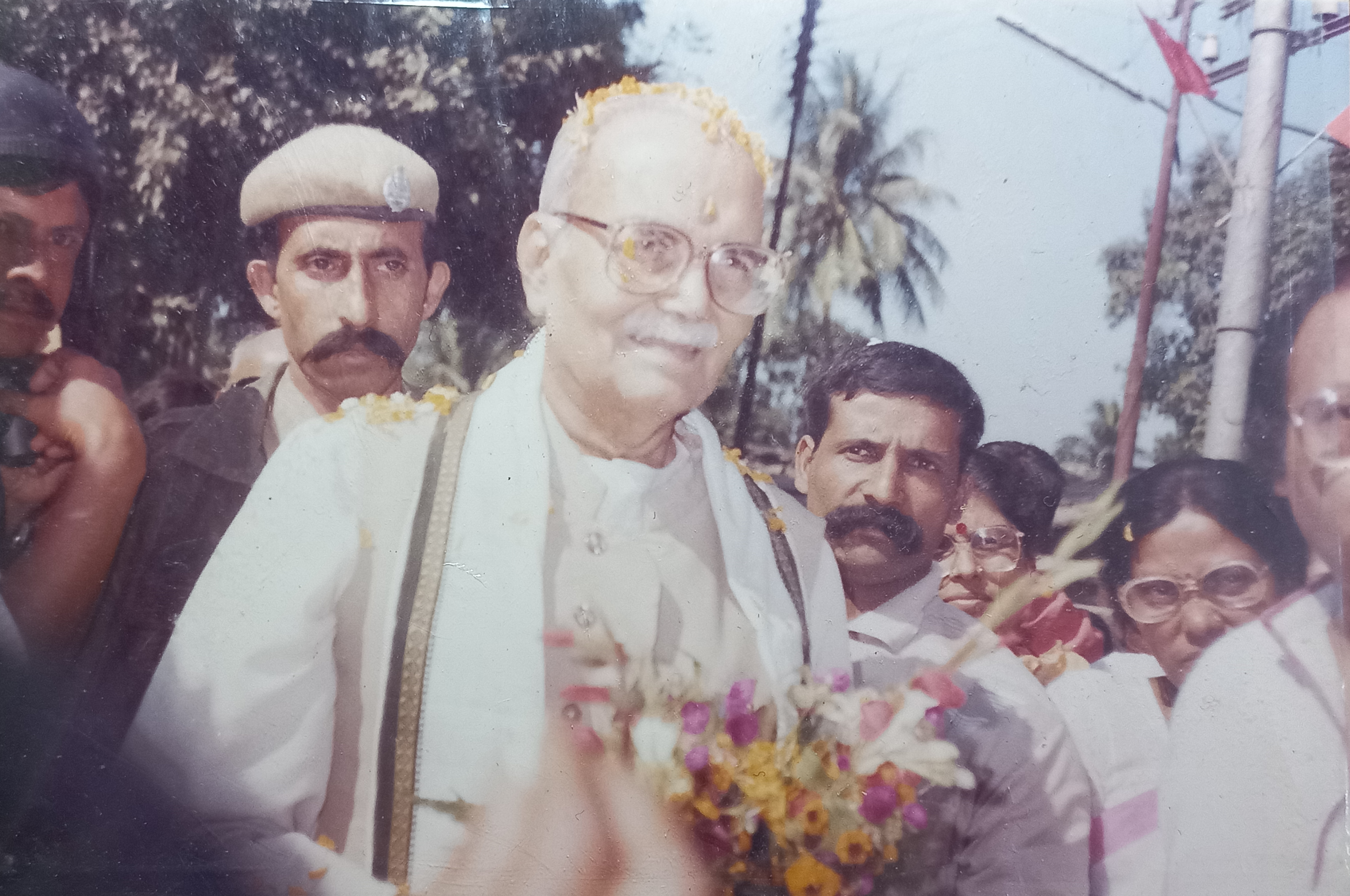
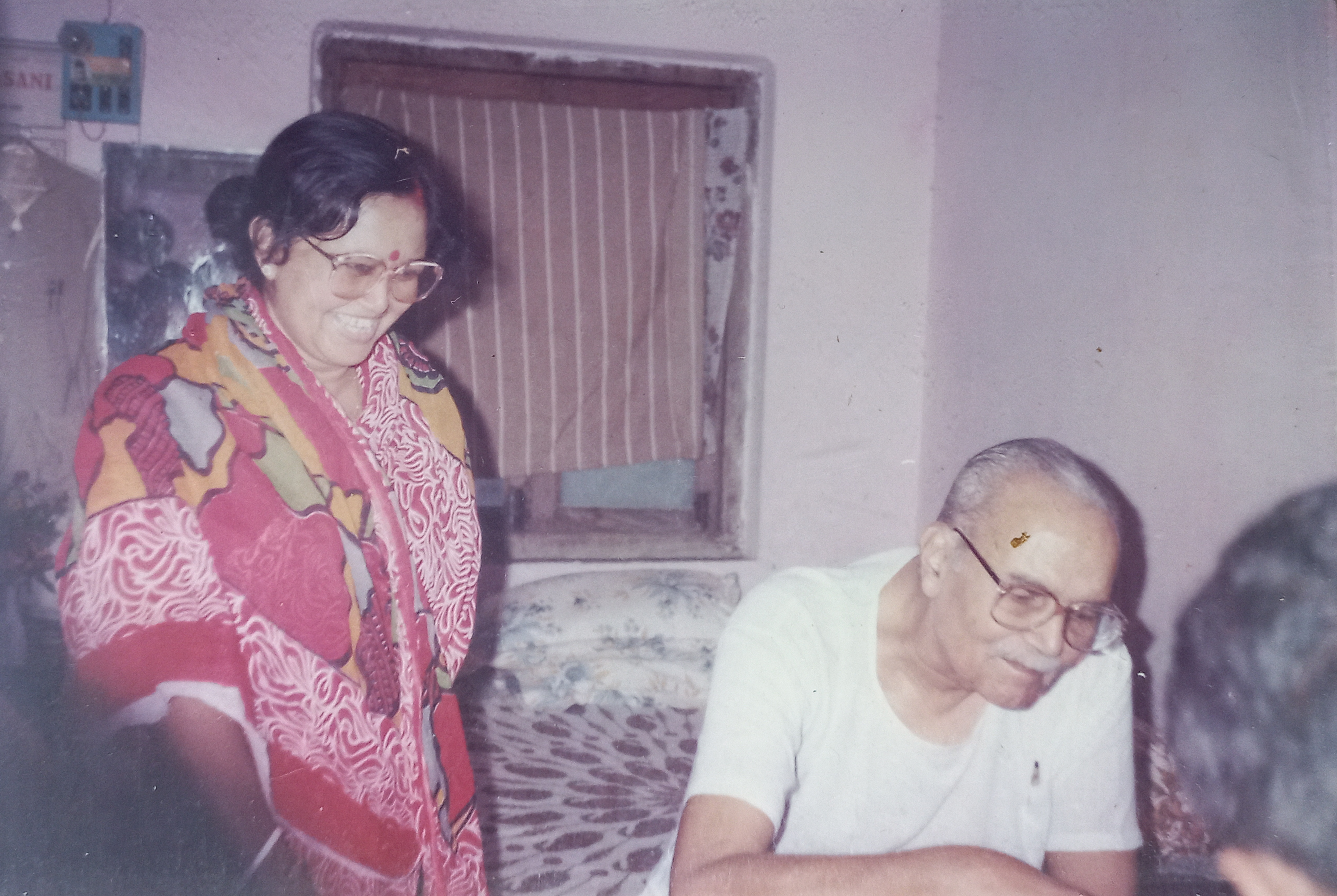
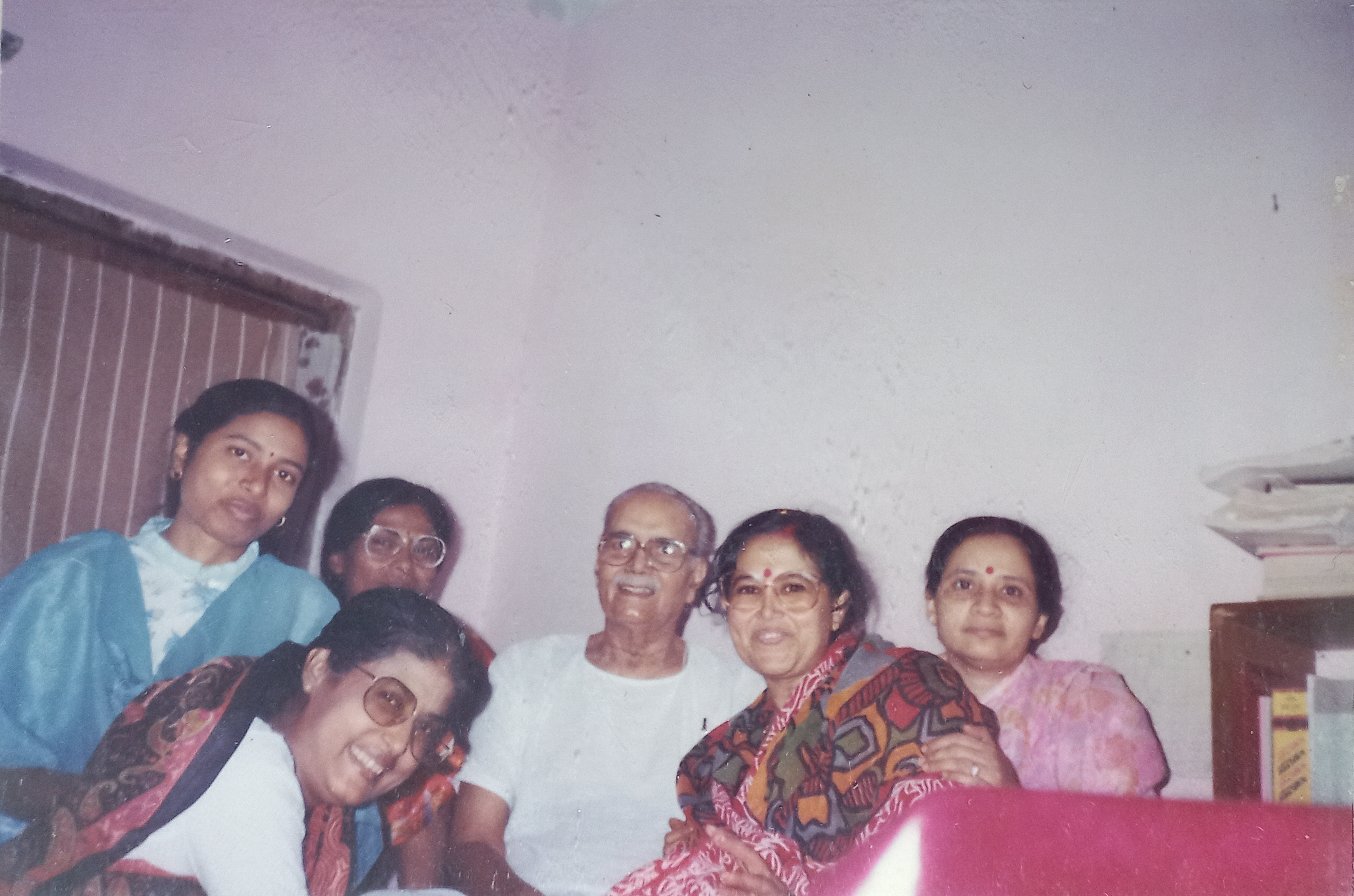
During his visit to Raiganj (WB), Rajendra Singh (Rajju Bhaiya) stayed at the residence of Dr. Gopesh Chandra Sarkar. Rajju Bhaiya (1922–2003) was the fourth Sarsanghchalak of the RSS, serving from 1994 to 2000. A former professor and Head of the Physics Department at the University of Allahabad, he left academia in the 1960s to fully dedicate himself to the RSS
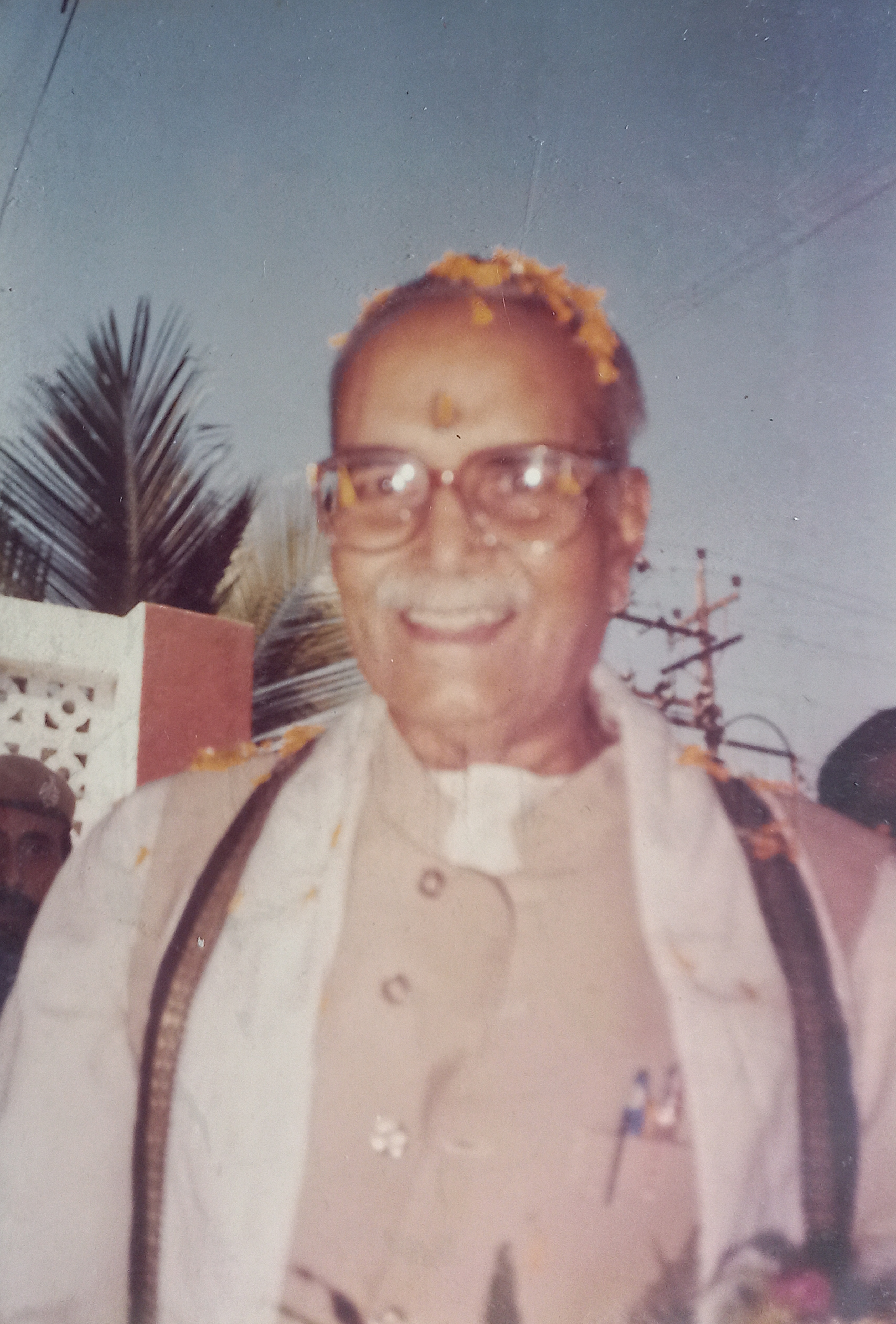
During his visit to Raiganj, Rajju Bhaiya (1922–2003), the fourth RSS Sarsanghchalak, stayed at Dr. Gopesh Chandra Sarkar’s residence.
During his visit to Raiganj, Rajju Bhaiya (1922–2003), the fourth RSS Sarsanghchalak, stayed at Dr. Gopesh Chandra Sarkar’s residence.
During his visit to Raiganj, Rajju Bhaiya (1922–2003), the fourth RSS Sarsanghchalak, stayed at Dr. Gopesh Chandra Sarkar’s residence.
During his visit to Raiganj, Rajju Bhaiya (1922–2003), the fourth RSS Sarsanghchalak, stayed at Dr. Gopesh Chandra Sarkar’s residence.
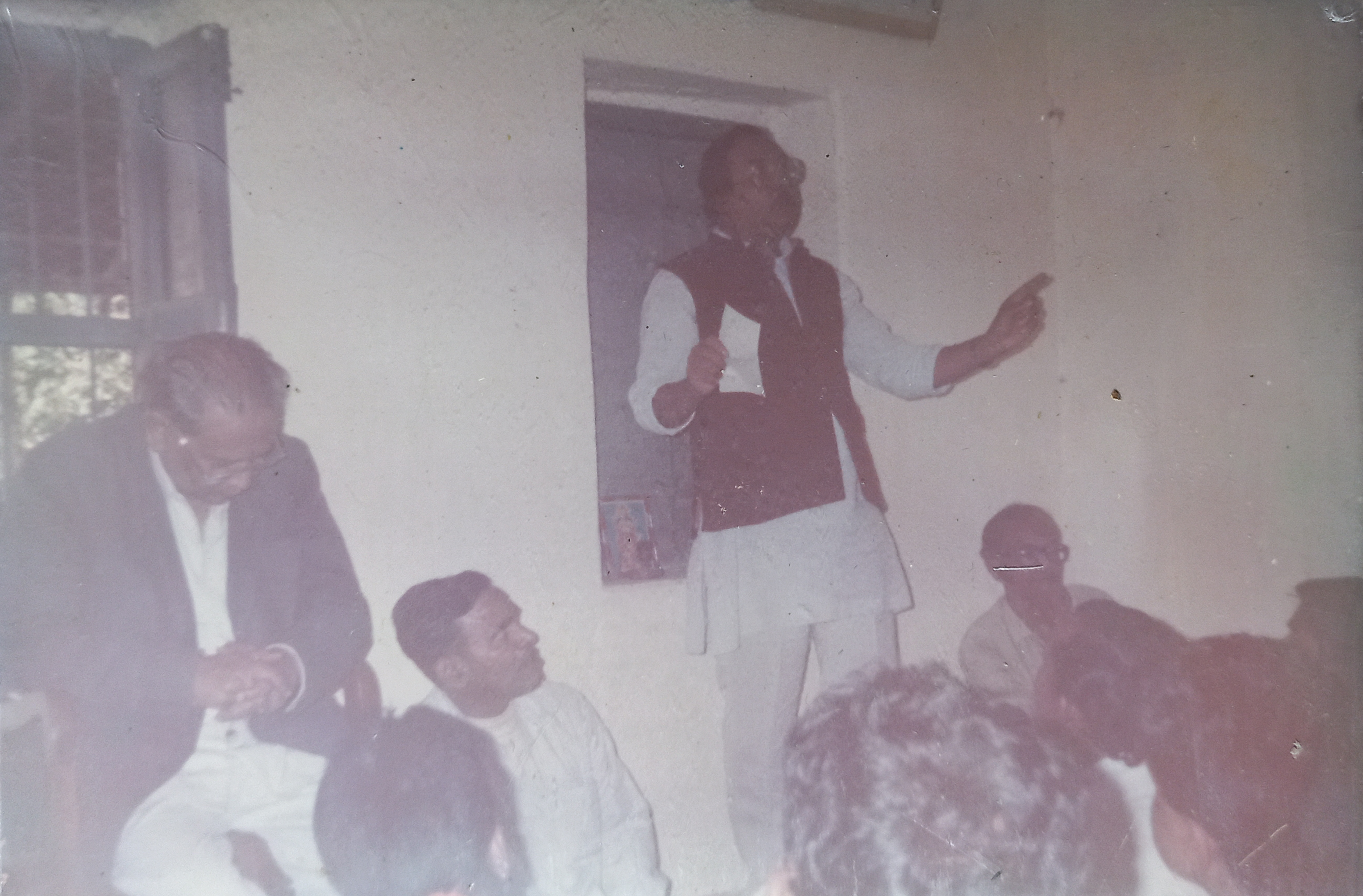
In this picture, you can see Dr. Gopesh Chandra Sarkar giving a speech at an RSS gathering on the Ram Mandir Issue in Ayodhya.
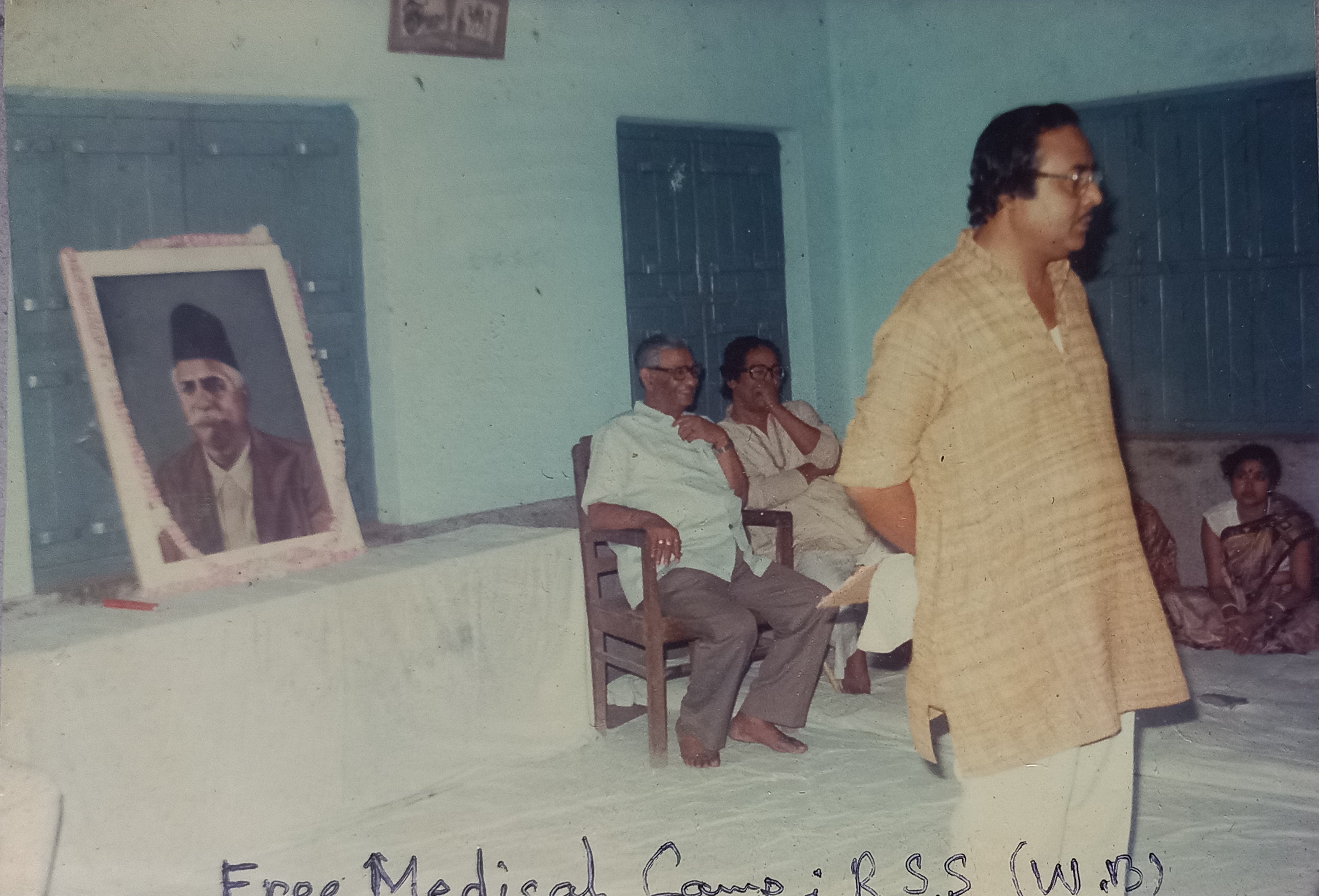
This is an image of Dr. Gopesh giving a speech at a free medical camp hosted in Raiganj.
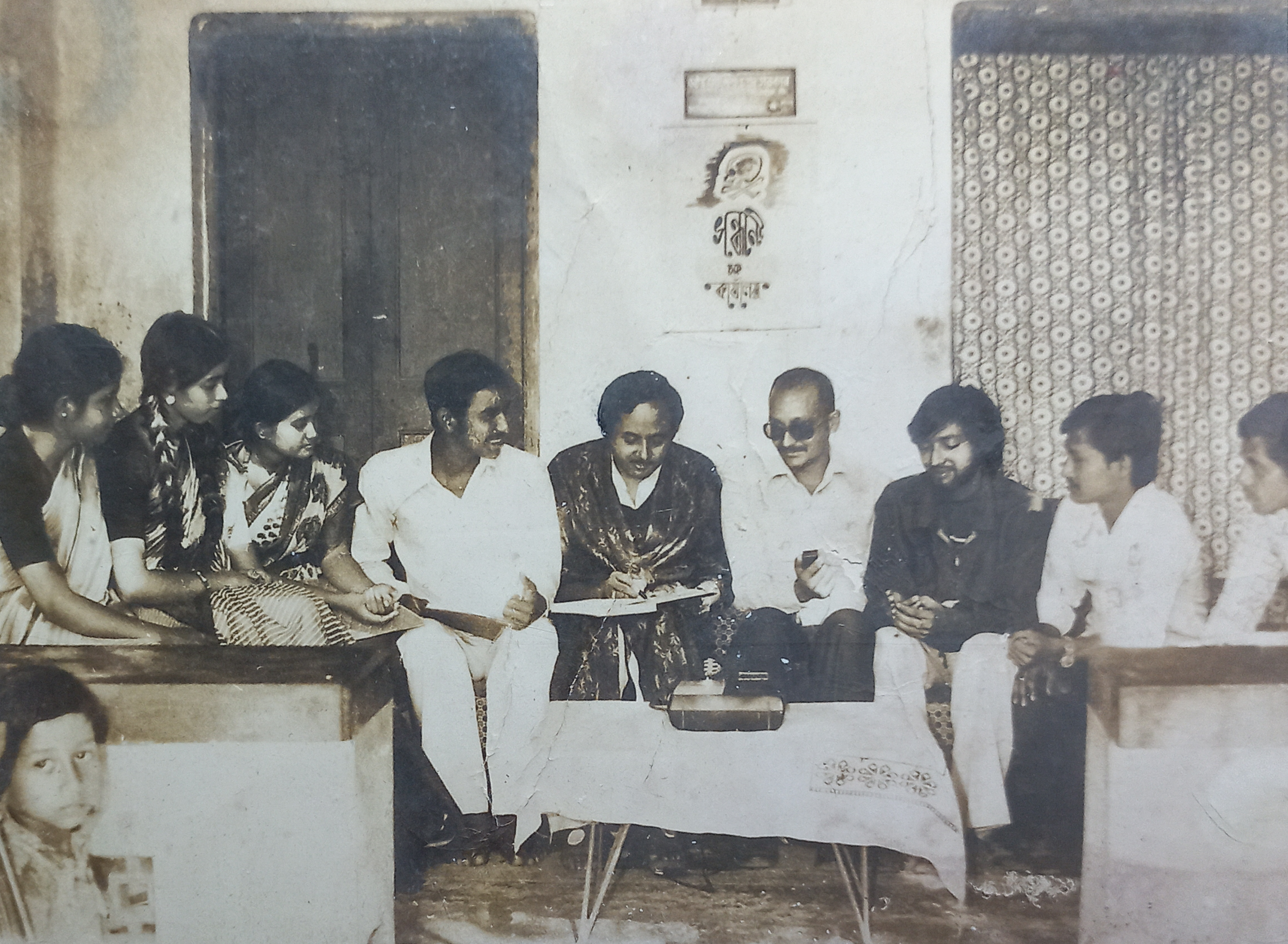
The Sandhanichakra is a research organisation started and headed by Dr. Gopesh Chandra Sarkar. This organisation conducts research and discussions on spiritual matters such as the soul, reincarnation, life after death, and supernatural powers of Yogis and Tantrics.
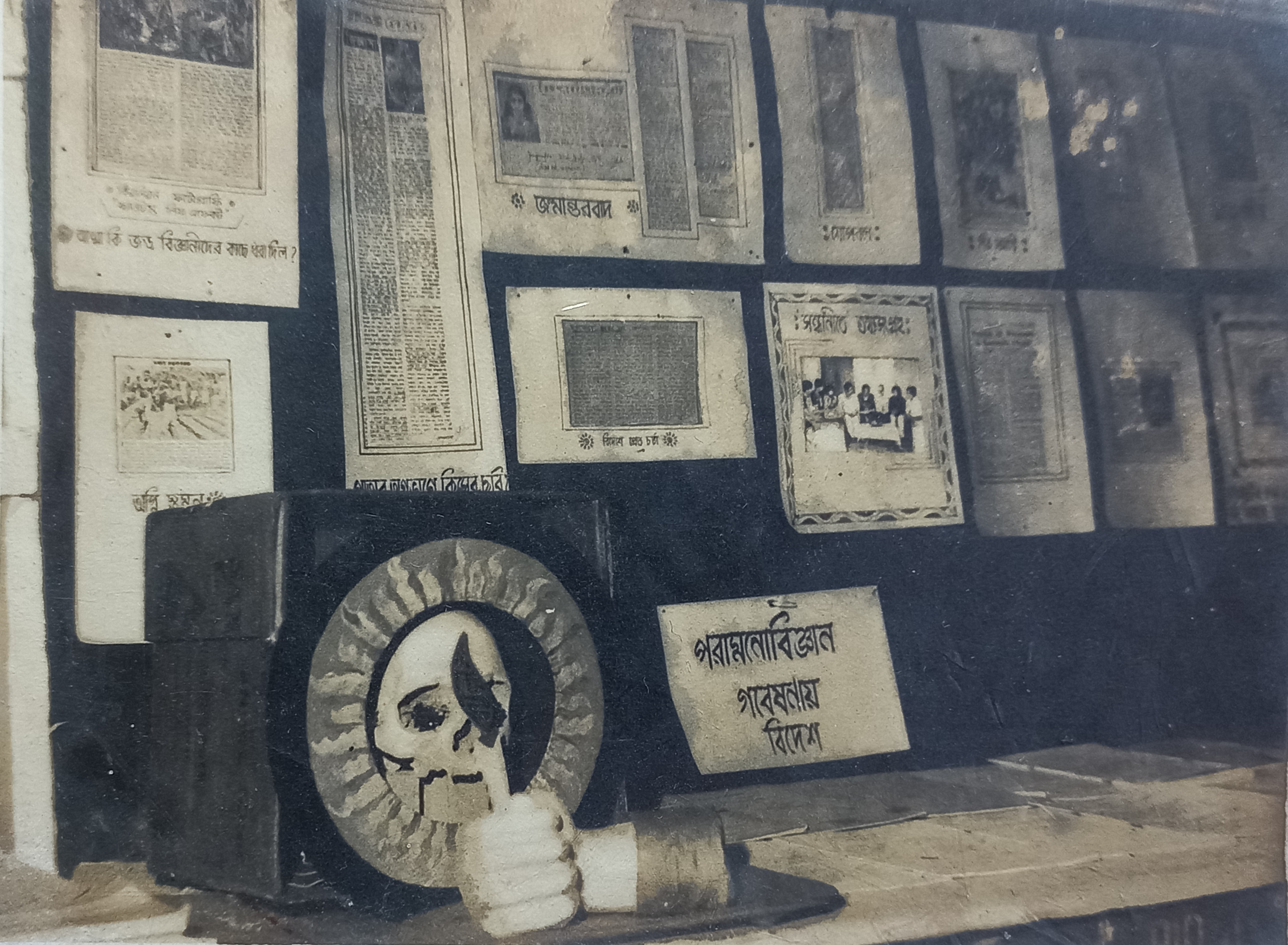
This is an image of the Sandhanichakra Exhibition conducted by Dr. Sarkar at the University College (N.B.U, Raiganj)

This is a part of Dr. Sarkar's library. This includes several books related to his interests. Some are even rare and not found today.
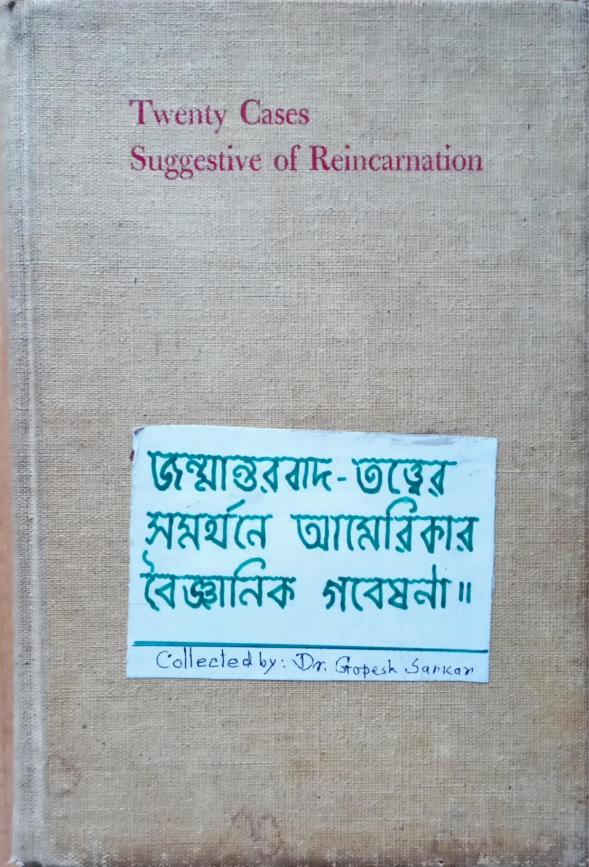
Research publication of Dr. Ian Stevenson (founder and director of the Division of Perceptual Studies at the University of Virginia), with his autograph, gifted to Dr. Sarkar due to his keen interest in spiritual matters and Sandhanichakra.
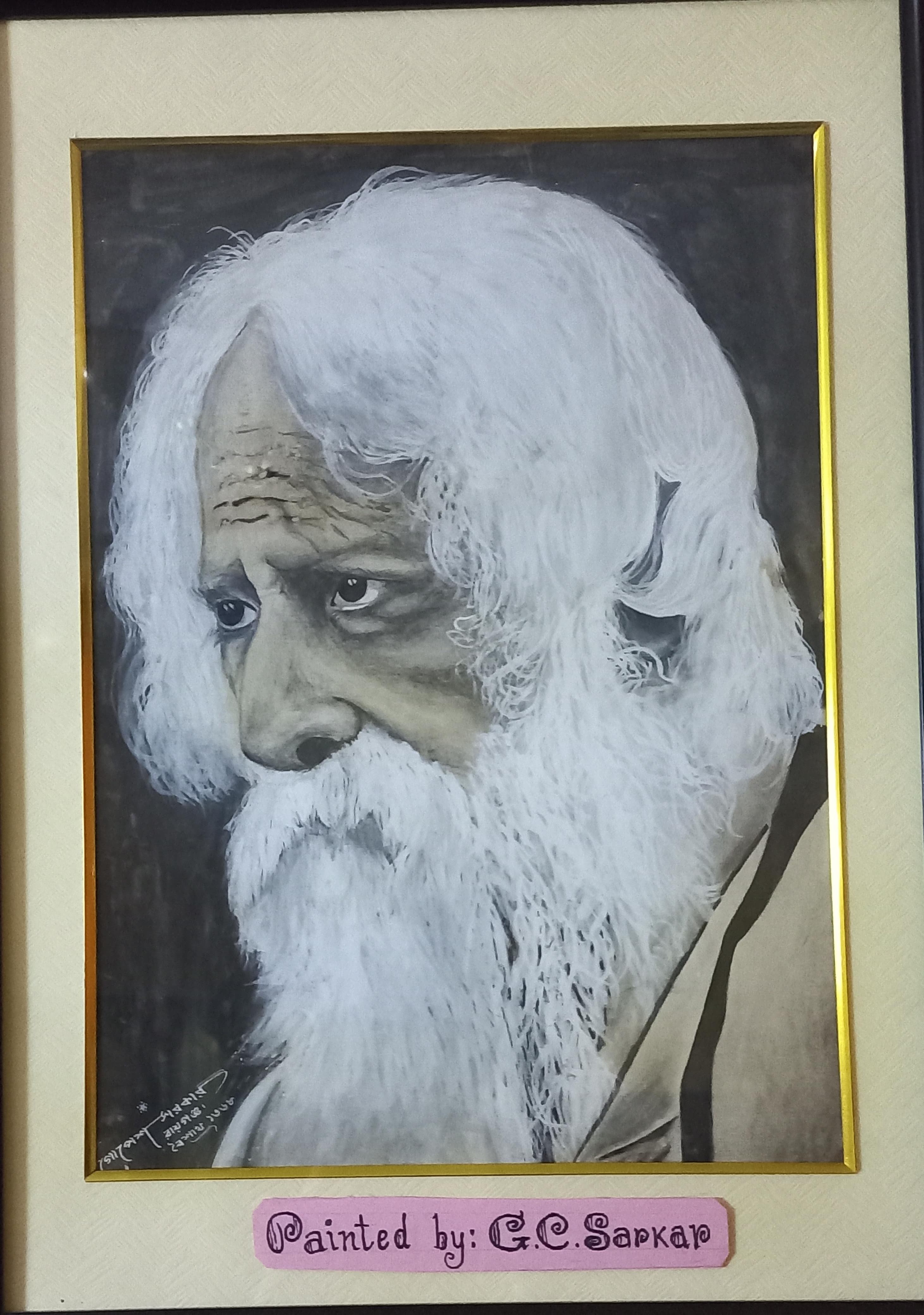
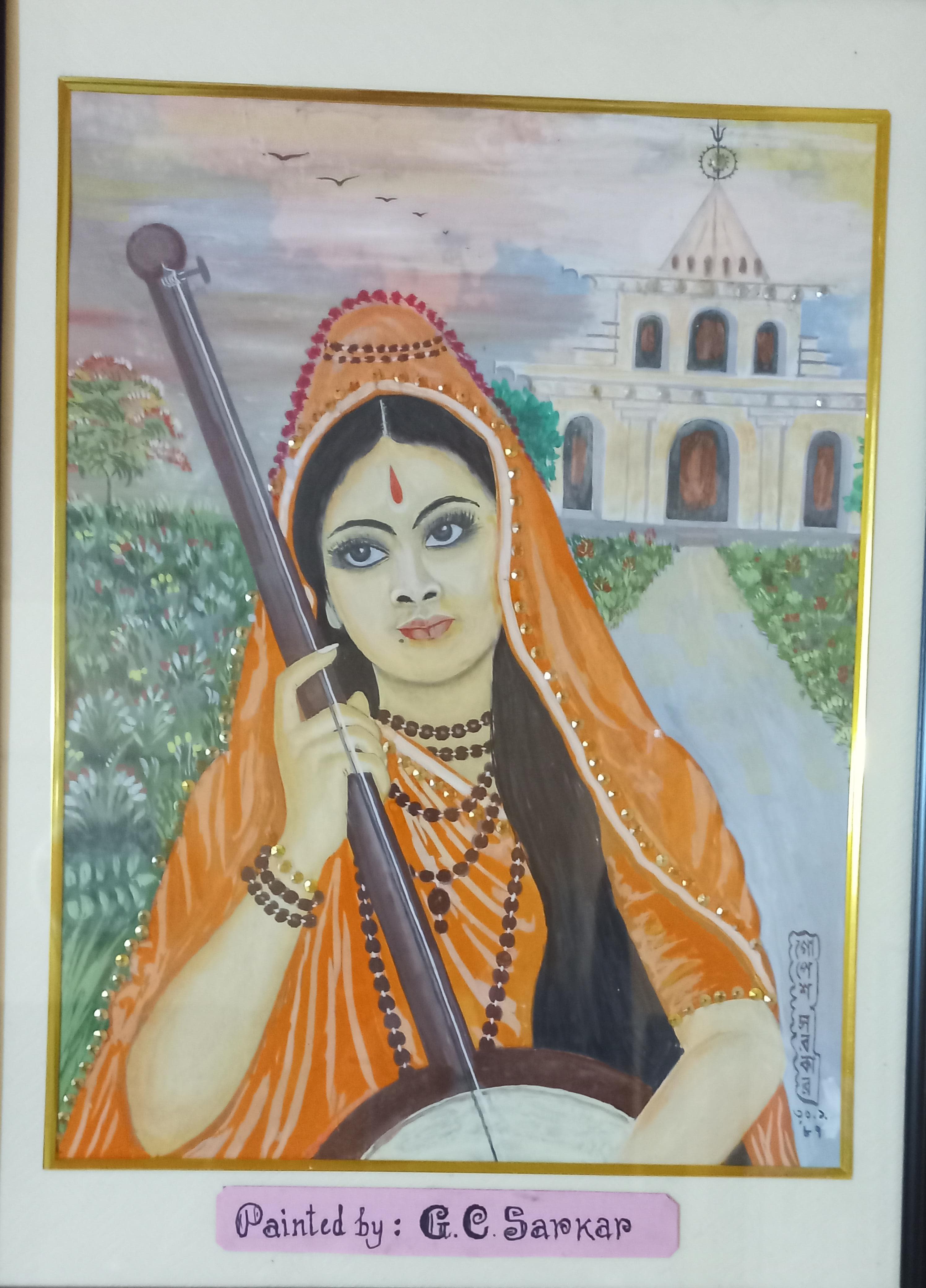
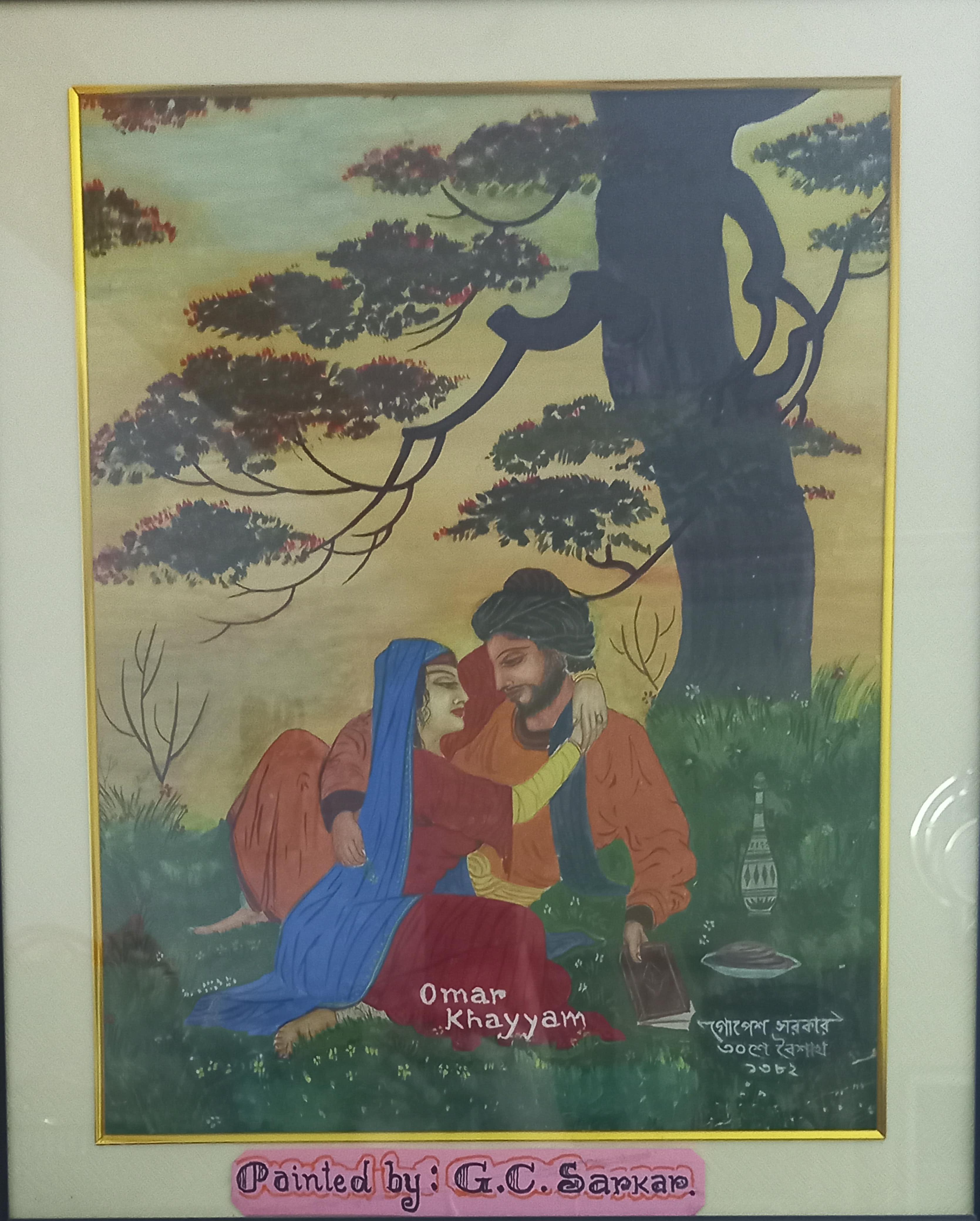
This is a picture of Rabindranath Tagore. Dr. Gopesh, who was not only a master of science but also a true artist at heart, had unmatched creativity in art. The world around him seemed to be his canvas. The brush strokes in his hands brought to life the very essence of the world, as if the scenery itself whispered stories in colors that only he could translate. Every sunrise was painted with its own hues, every shadow had a shape only his mind could capture, and every fleeting moment in nature was transformed into a work of art.
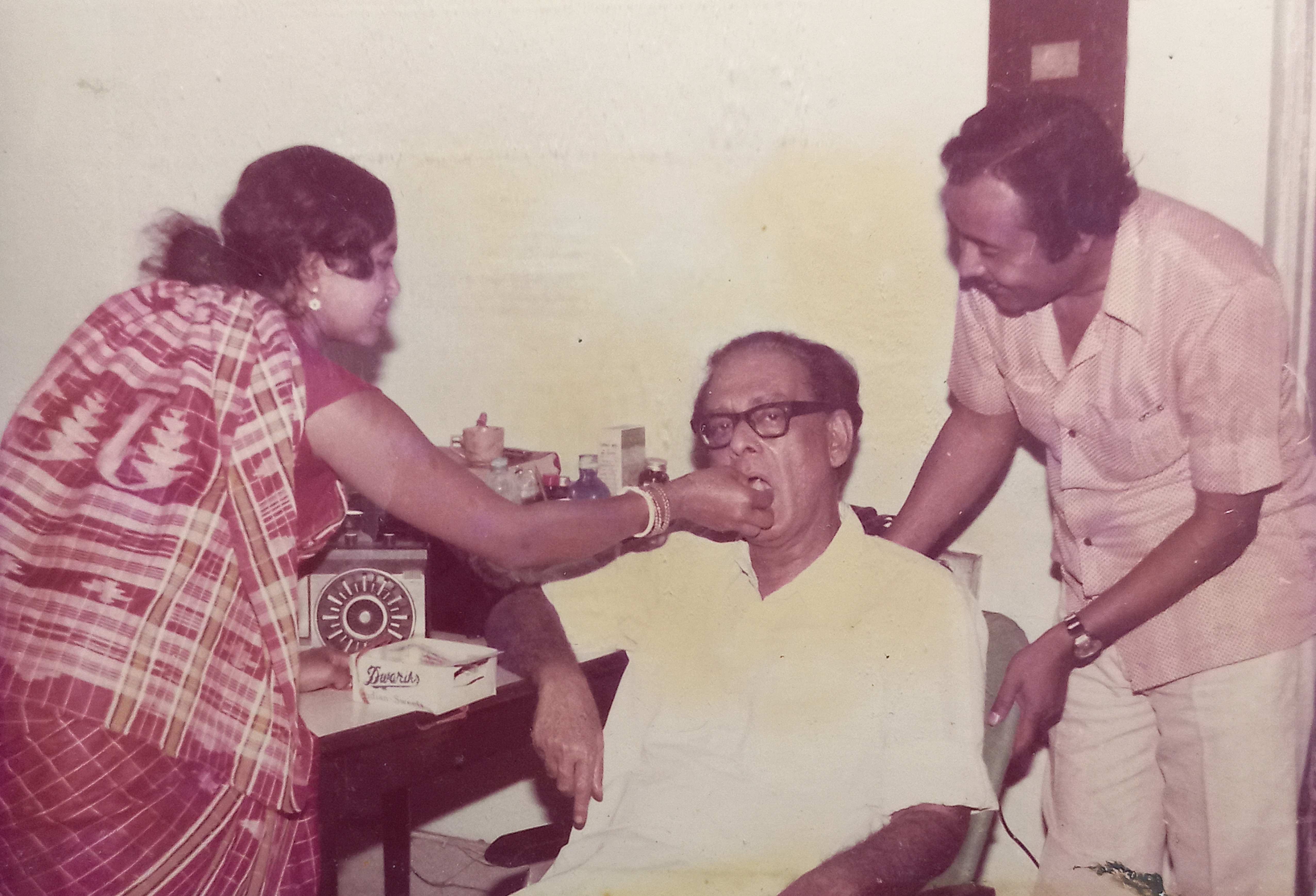
This is the picture of Dr. Gopesh Chandra Sarkar and SMT. Khela Sarkar's meet with the world famous legendary musician Hemanta Mukhopadhyay in 1984 when Dr. Gopesh was 43 years old. Dr. Gopesh Chandra Sarkar and Smt. Khela Sarkar were ardent followers of Hemanta Mukhopadhyay. Dr. Sarkar was fond of singing songs sung by Hemanta Mukhopadhyay.
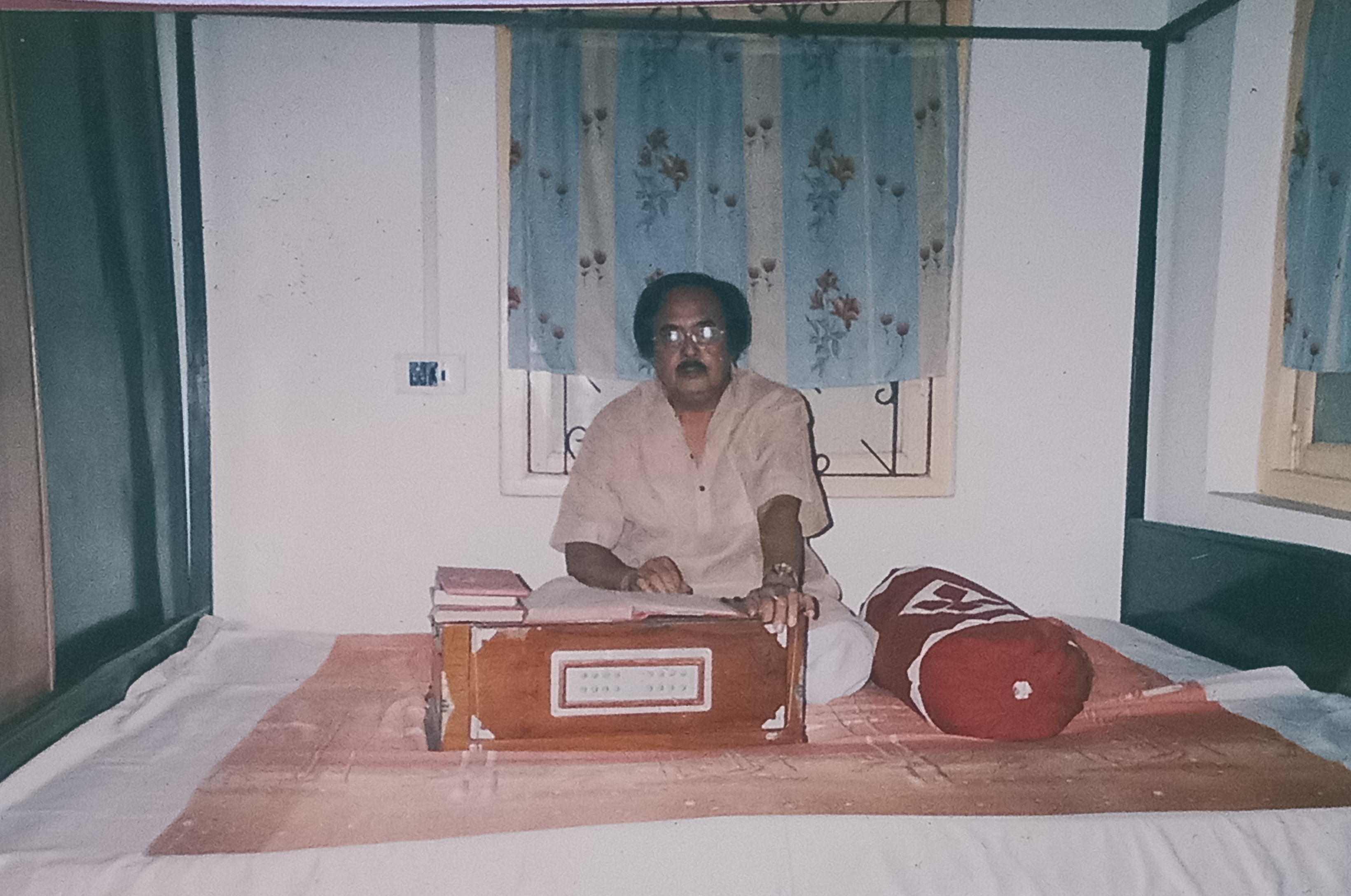
This is a picture of Dr. Gopesh Chandra Sarkar presenting a vocal song by Hemanta Mukhopadhyay. Listeners always appreciated his presentations and usually found a flavor of Hemanta's voice in his tone.
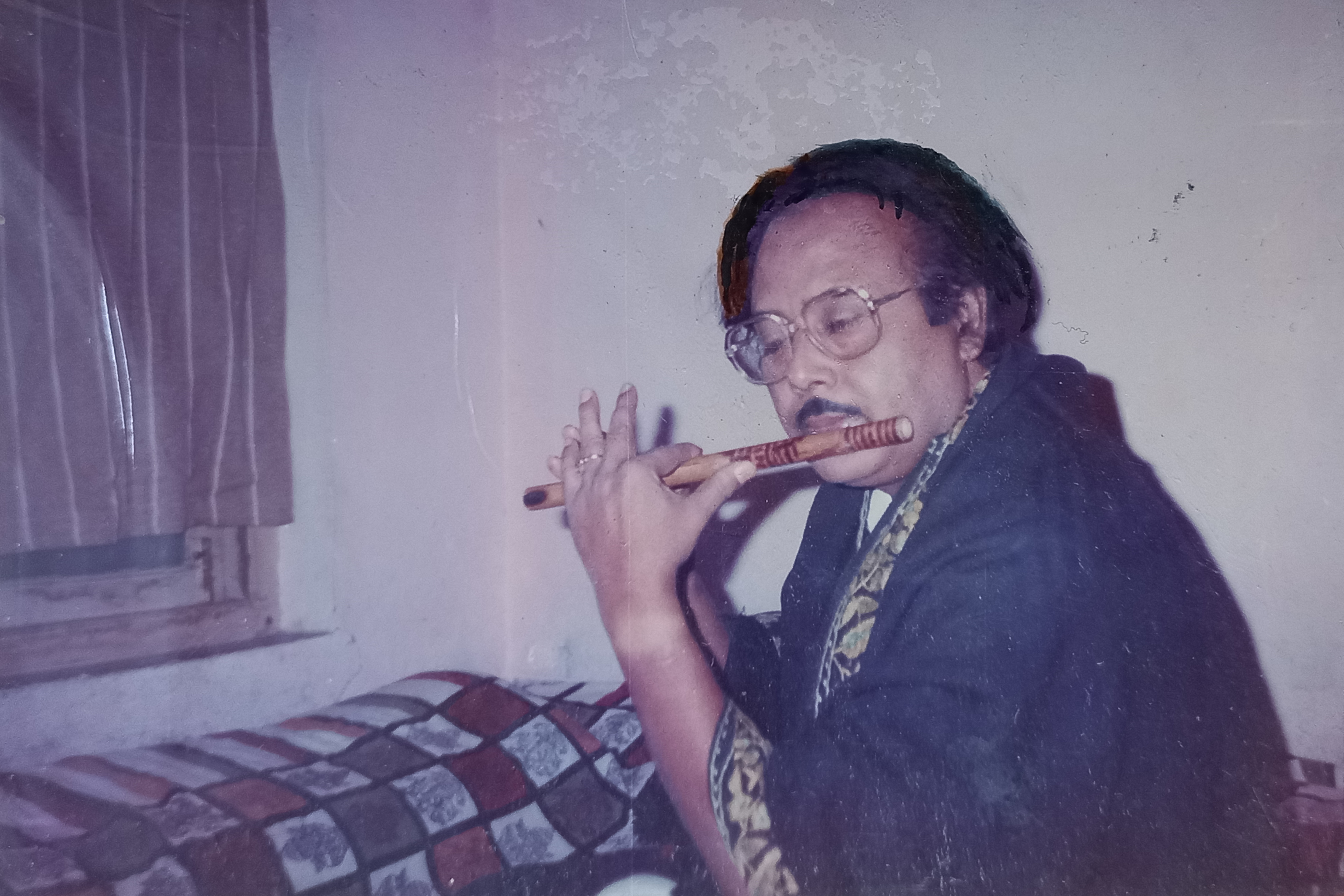
This is a picture of Dr. Gopesh Chandra Sarkar playing on the flute. He was also a stage performer on the flute.
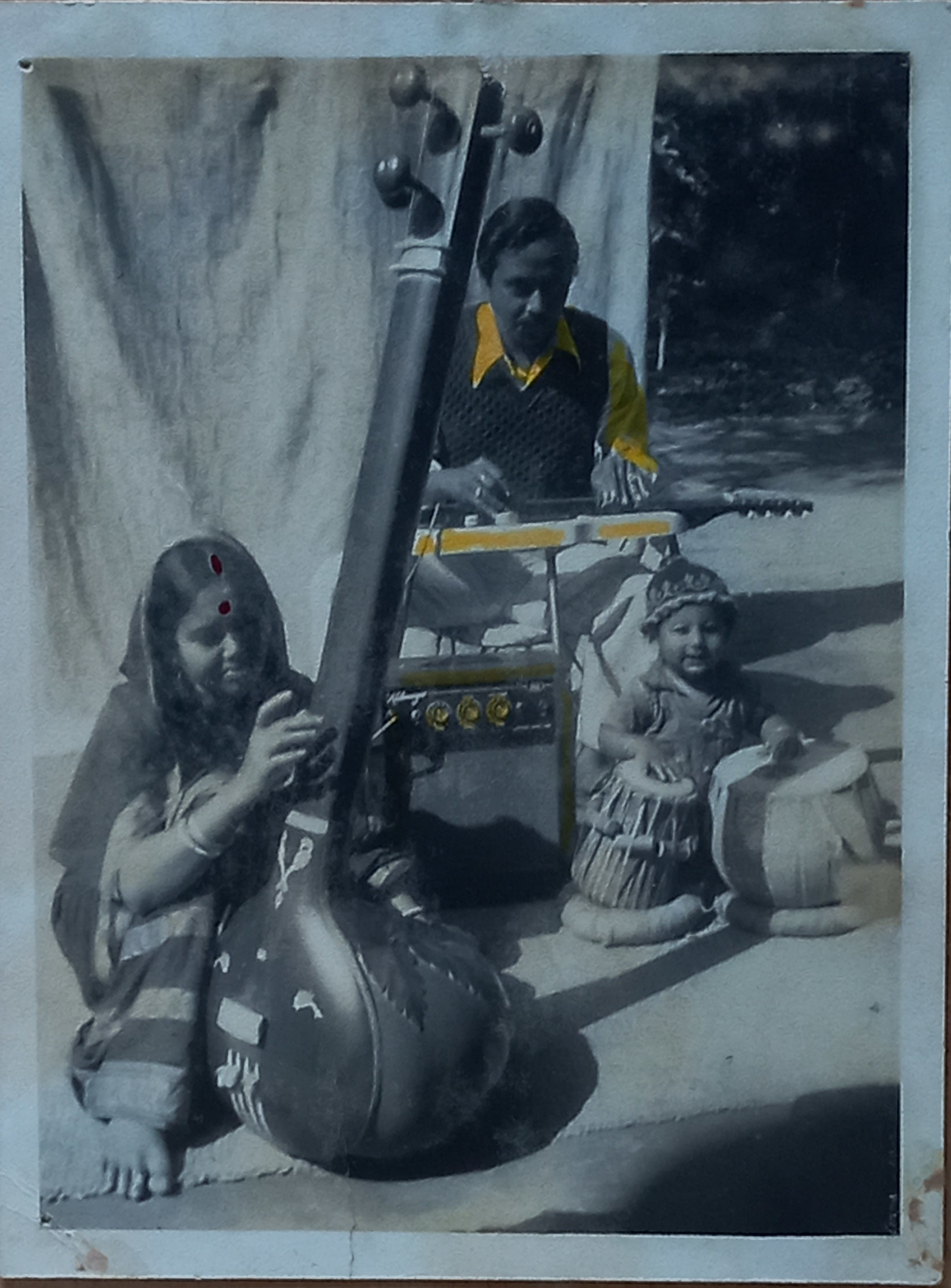
This is a picture of Dr. Gopesh Chandra Sarkar playing on electric guitar, accompanied by his elder son, Goutam, on tabla, and his wife on Tanpura.
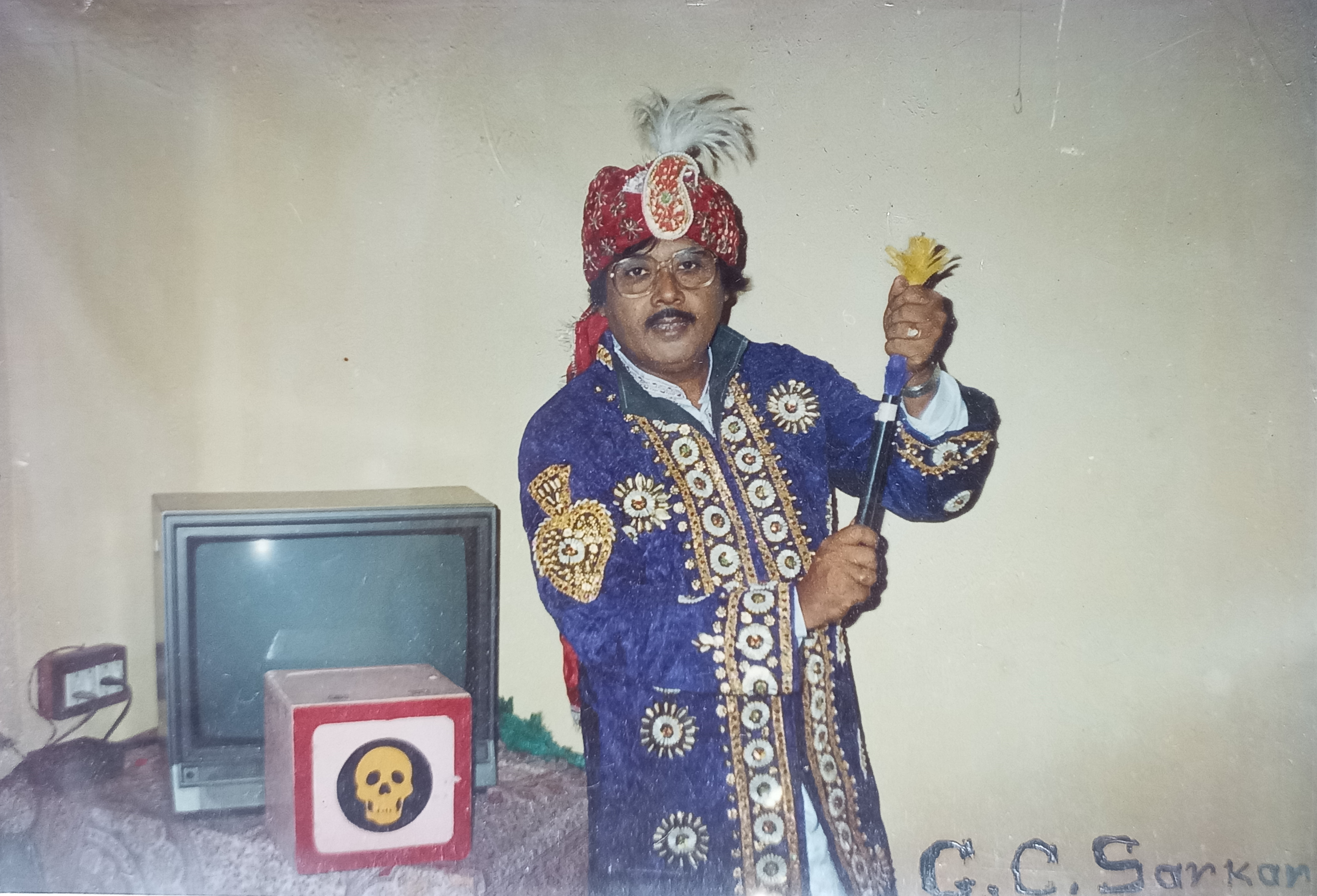
Magic Show Performance of G.C Sarkar.
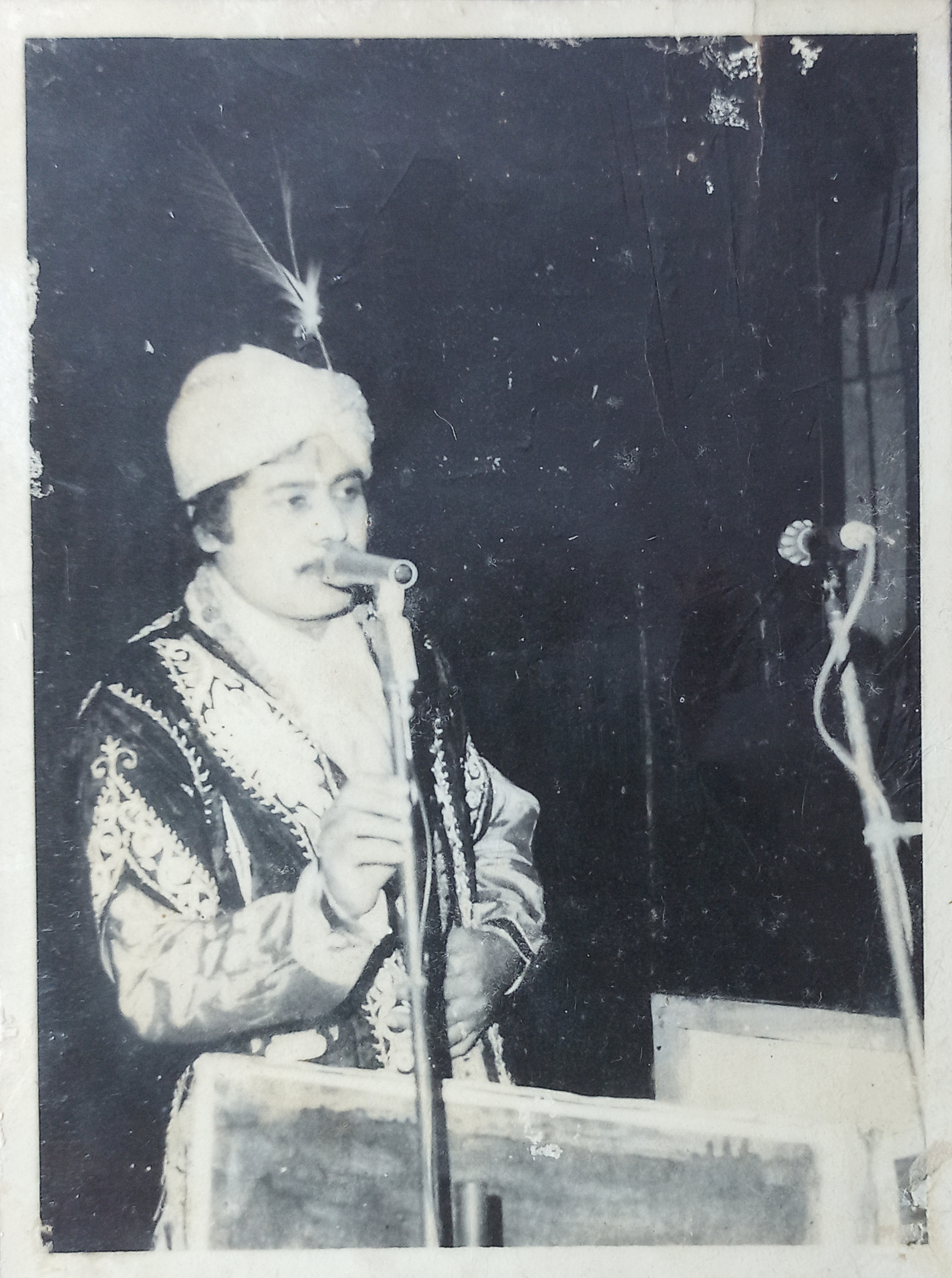
This is a picture of Dr. Gopesh Chandra Sarkar participating in a magic show in Raiganj.
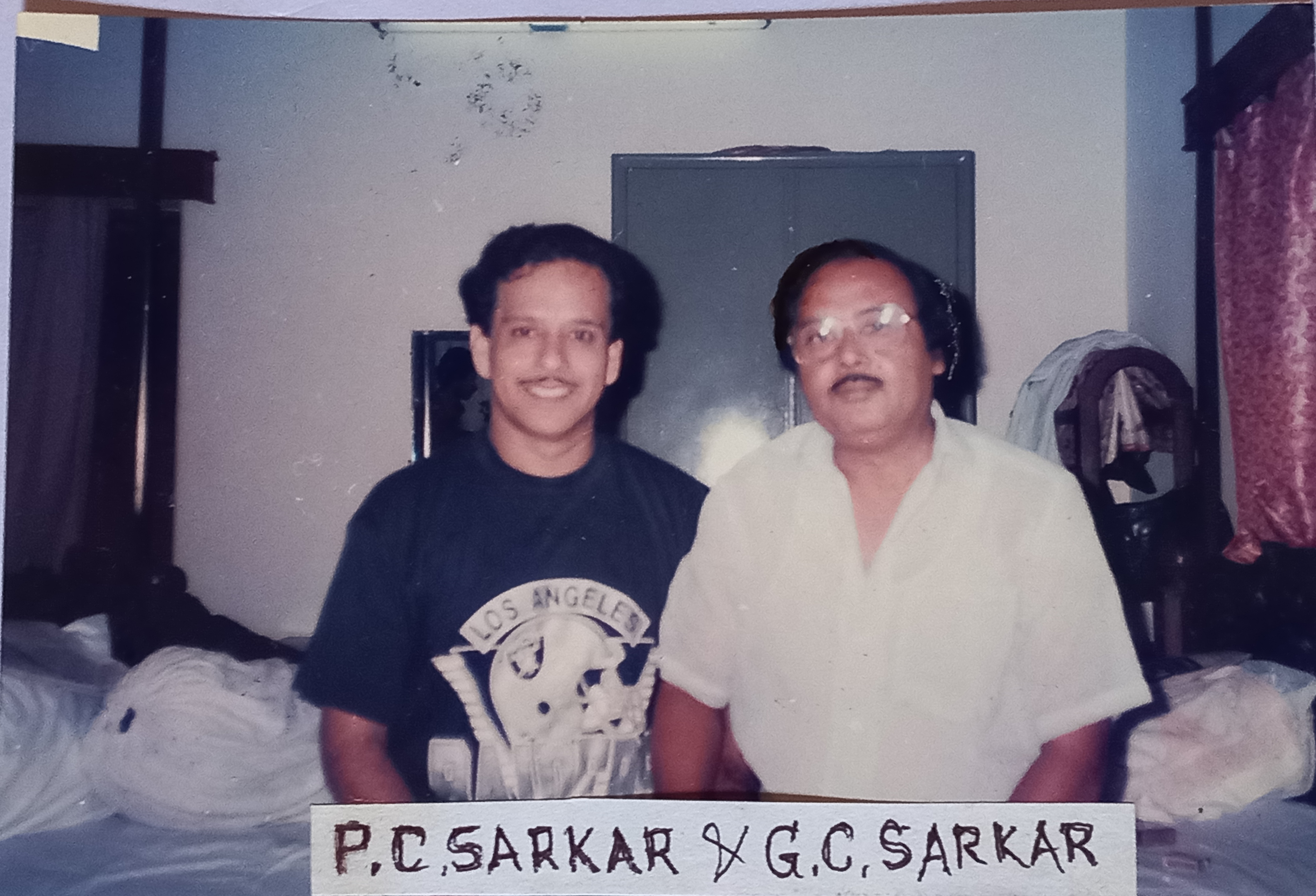
Dr. Sarkar had an indomitable and inherent curiosity and numerous queries, from his boyhood, about the miracles of the mysterious spiritual world and the supernatural powers claimed to have been achieved by yogis and tantrics. Through his parapsychological research organization, *Sandhani Chakra*, he aimed to unveil and assess the reality of these claims and reveal the truth behind them. To facilitate such research work, he felt the need to acquire proper knowledge of magic tricks in addition to the scientific expertise of the scholars in his Sandhani Team. Therefore, he came into contact with the world-famous magician "Jadu Samrat" P.C. Sorcar (Senior) in Kolkata, and being inspired and guided by the great P.C. Sorcar (Sr.), he learned basic magic tricks from the Indian Magic Institute, Kolkata—not to become a professional magician, but to conduct proper investigations into the claimed supernatural activities. Interestingly, his very name, G.C. Sarkar, seemed magical and, perhaps, required some knowledge of magic to truly be worthy of it.
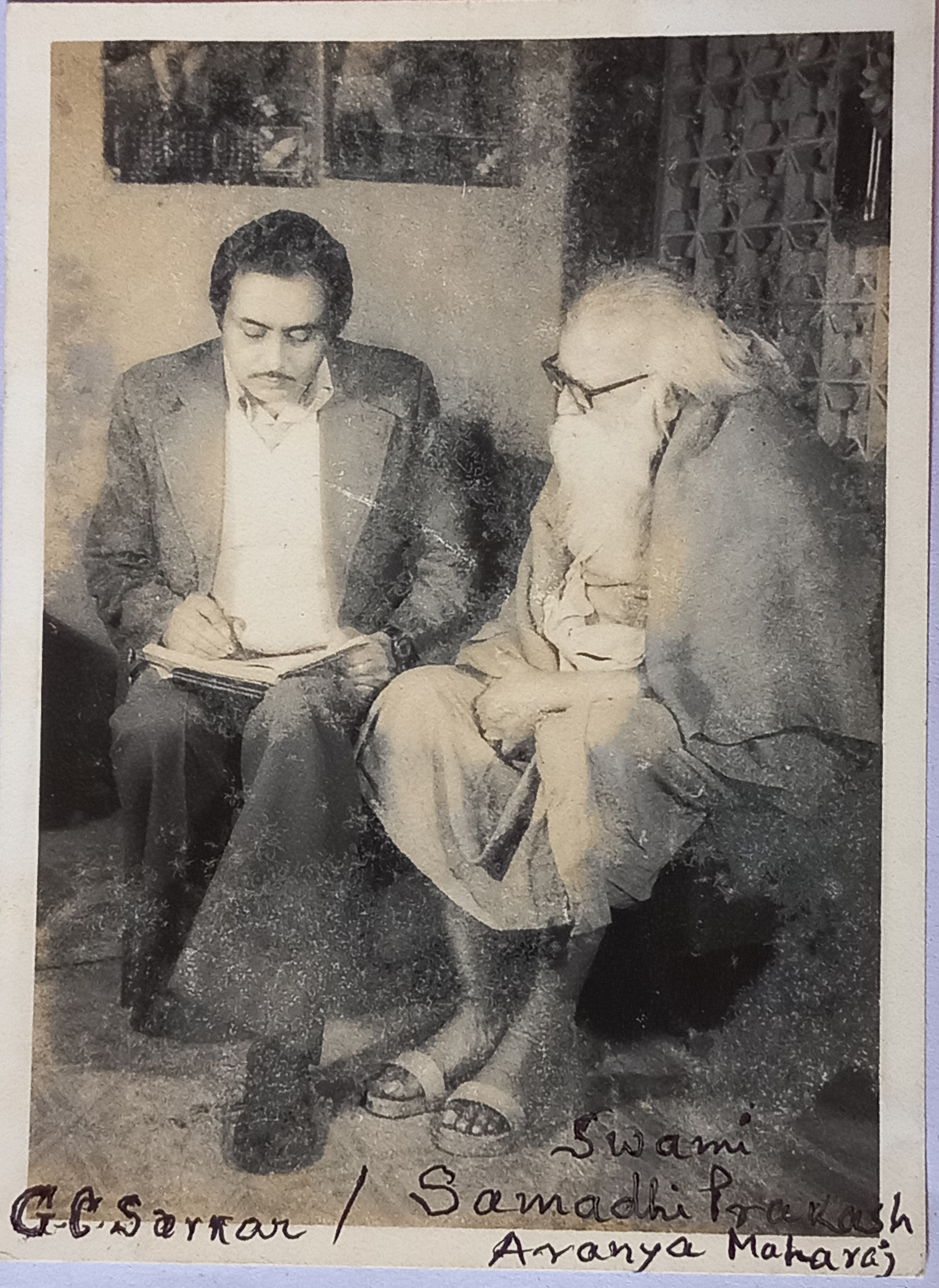
Swami Samadhi Prakash Aranya Maharaj (1885–1985) was a renowned Sankhya-Yogi of Bengal, a highly educated, enlightened, and divine personality who achieved *Moksha* (Nirvana)—the highest goal of yoga-sadhana—in the middle part of his long lifespan of 101 years. He attained immense yogic and supernatural powers early in life, and through deep meditation, he reached a transcendental stage where he could recall his previous lives, thereby revealing and supporting the truth of the Hindu doctrine of rebirth (reincarnation). Following an accidental head injury that resulted in multiple skull fractures, he was admitted to a hospital where surgery and anaesthesia were deemed inevitable. However, he instructed the doctor to proceed without anaesthesia, and the operation was carried out accordingly while he remained completely calm and quiet throughout, astonishing the doctor, who declared him to be undoubtedly a powerful yogi with supernatural abilities. Most incredibly, his divine touch reportedly revived the dead bodies of a young girl and a baby. Beyond his yogic power, he was also a great writer, social reformer, and yoga researcher, participating in the Indian Science Congress Association’s conferences in Hyderabad (1937) and Kolkata (1938). He strongly opposed the evil practice of untouchability. Dr. Gopesh Chandra felt fortunate to become a humble disciple of this great Yogi.
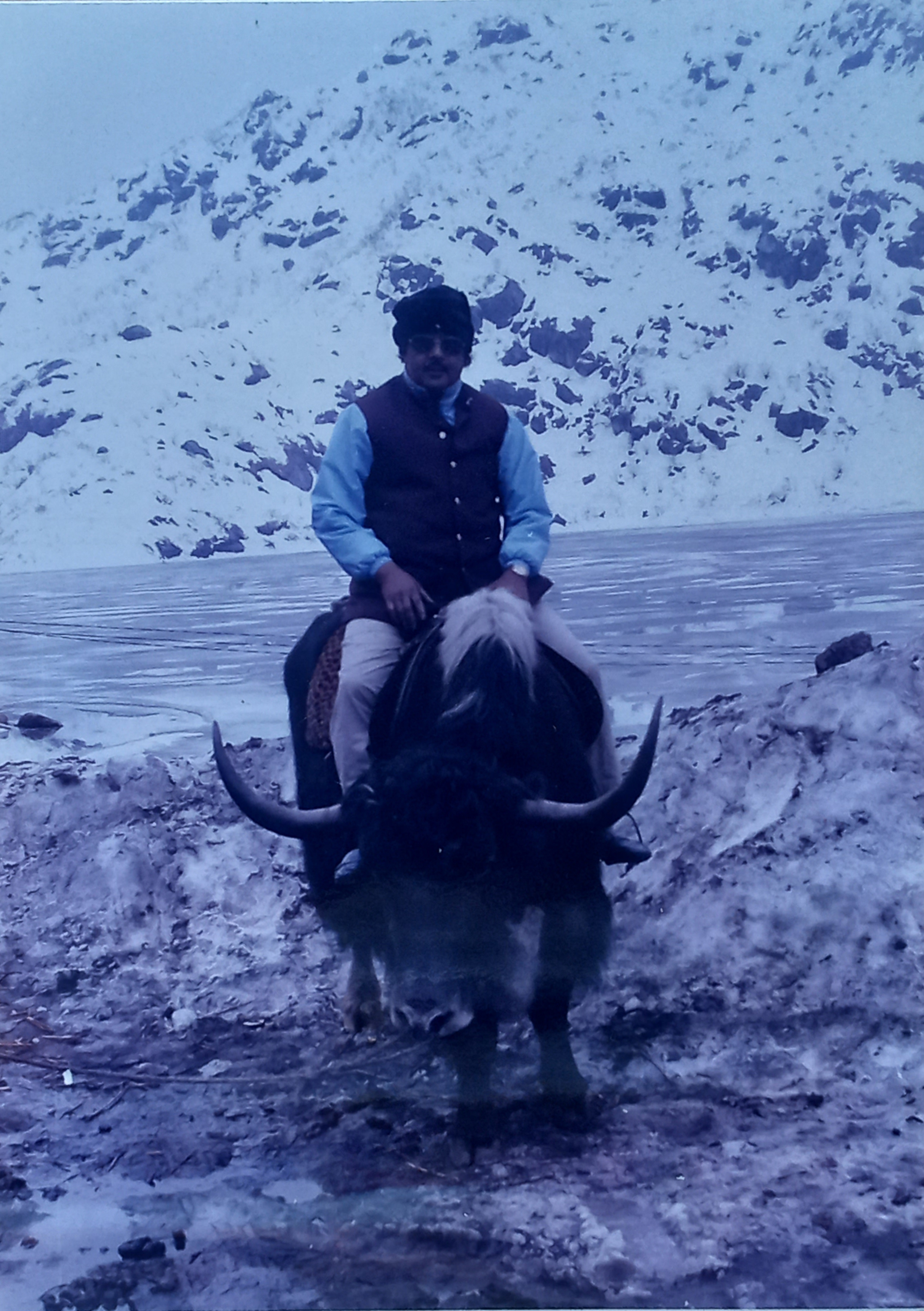
Dr. Gopesh Chandra Sarkar is seen riding a yak at Chhangu Lake, Gangtok during his tour program.
Dr. Gopesh Chandra Sarkar (1941–2023) was an Indian academic, botanist (PhD), educator, and political leader who served as the State Vice-President of the BJP in West Bengal, RSS Sanghachalak of West Dinajpur, and contested the 2009 Lok Sabha elections from Raiganj constituency.
Dr. Gopesh Chandra Sarkar represented the Bharatiya Janata Party (BJP) as its official candidate from the Raiganj Lok Sabha constituency in West Bengal during the 2009 Indian General Elections, securing nearly 40,000 votes.
Dr. Gopesh Chandra Sarkar earned his PhD in Botany in the 1970s and served as a University Reader at University College (North Bengal University, Raiganj) for over 30 years. His publications explored plant physiology, homeopathy, and Kirlian bio-photography.
Dr. Sarkar served as the Sanghachalak (District President) of the Rashtriya Swayamsevak Sangh (RSS) for West Dinajpur and Uttar Dinajpur, and as State Vice-President of the BJP in West Bengal, hosting RSS Sarsanghchalak Rajju Bhaiya at his Raiganj residence.
Sandhanichakra was a spiritual and parapsychological research organisation founded and headed by Dr. Gopesh Chandra Sarkar to investigate rebirth, reincarnation, past lives, and yogic phenomena through systematic scientific observation.
Dr. Gopesh Chandra Sarkar was born on January 1, 1941, in the village of Betil, Pabna District in undivided Bengal (now Bangladesh), navigating the historical partition before relocating to India in the 1960s.
.png)